AI Agents Go Mainstream in 2026: Coding Assistants, Browser Automation, and Workflow Tools Hit Critical Mass
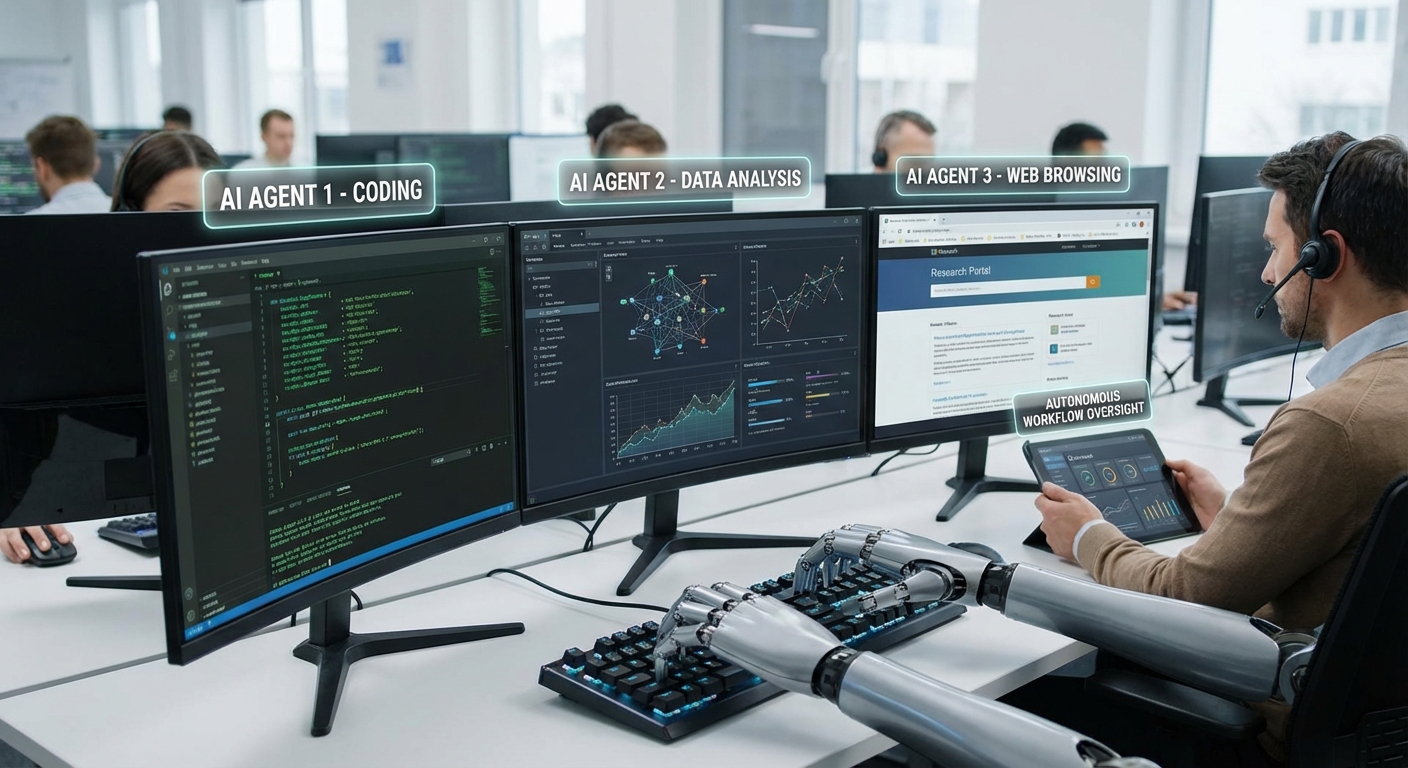
The year 2026 has been widely characterized as the moment AI agents transitioned from experimental demos to production-ready tools used by millions. Coding assistants powered by large language models are now embedded in the daily workflows of an estimated 40% of professional software developers, with tools like GitHub Copilot, Cursor, and Claude Code handling everything from autocomplete to multi-file refactoring. Browser-based AI agents can navigate websites, fill forms, and complete multi-step online tasks with minimal human supervision. Enterprise workflow automation platforms are using generative AI to connect disparate systems, process documents, and manage routine business processes end to end. The maturation of the MCP protocol has been a key enabler, providing a standard way for AI agents to interface with external tools and services. While concerns about reliability, hallucination, and oversight remain, the productivity gains are tangible enough that organizations that have not adopted AI agents are increasingly viewed as falling behind.
The coding assistant category has seen the most dramatic adoption curve. GitHub Copilot now has over 15 million active users, while Cursor has grown to 4 million and Anthropic's Claude Code has reached 3 million developers in less than a year since launch. Stack Overflow's 2026 Developer Survey found that developers using AI coding assistants report an average productivity increase of 35-55% depending on the task, with the largest gains in boilerplate generation, test writing, and code review. The nature of development work is shifting as well — senior engineers increasingly spend their time reviewing and directing AI-generated code rather than writing it line by line, while junior developers use AI assistants as learning tools that explain unfamiliar patterns and suggest best practices. The result is a compression of the experience curve, with first-year developers producing code at quality levels previously associated with three to five years of experience.
Beyond coding, the enterprise AI agent market is experiencing explosive growth across multiple verticals. Customer service agents powered by LLMs now handle over 60% of initial support interactions at companies like Klarna, Shopify, and American Express, with human agents stepping in only for complex escalations. In financial services, AI agents are automating trade settlement, regulatory compliance reporting, and fraud detection with accuracy rates that exceed human performance by 12-18% on average. The legal sector has been slower to adopt but is accelerating, with AI agents now drafting contracts, reviewing discovery documents, and conducting legal research at major law firms. The common thread across all these deployments is the MCP protocol, which has become the standard integration layer enabling AI agents to securely access enterprise systems, databases, and third-party APIs. McKinsey's latest analysis projects the global AI agent market will reach $85 billion by 2028, making it one of the fastest-growing segments in enterprise technology.
Sources
McKinsey, Stack Overflow Survey, Wired