ASML EUV Capacity Crunch: SK Hynix and TeraFab Already Face Allocation Difficulties as imec Takes High-NA Delivery
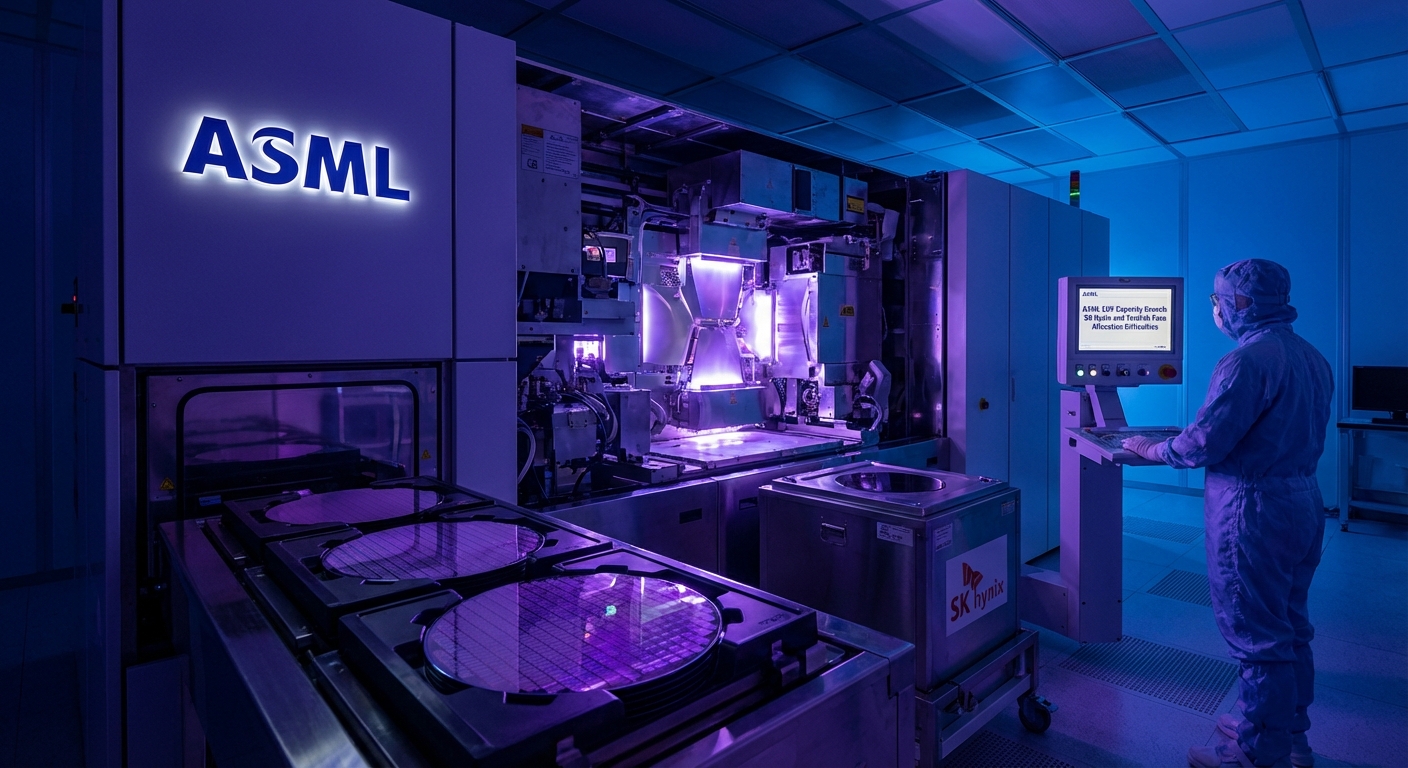
imec, Belgium's leading semiconductor research center, has taken delivery of ASML's EXE:5200 — the most advanced High-NA EUV lithography system currently available — targeting full qualification by Q4 2026 for sub-2nm process development. The news arrives as ASML reported full-year 2025 net sales of €32.7 billion and net income of €9.6 billion. For 2026, the company guides for revenue of €34 billion to €39 billion, supported by a gross margin of 51%–53%. EUV-specific bookings surged 150% quarter-over-quarter in Q4 2025, reflecting the intensity of forward demand.
SK Hynix has committed approximately $7.9 billion for roughly 30 EUV systems by December 2027, while Samsung is acquiring approximately 20 EUV systems for its Pyeongtaek P5 fab at an estimated cost of $4 billion. A DigiTimes analysis published April 8, 2026 flags that both SK Hynix and the Elon Musk-backed TeraFab project are already facing EUV capacity allocation difficulties — meaning ASML's production output cannot satisfy current committed order volumes within customers' desired timelines.
ASML is the sole global supplier of EUV lithography tools, and the High-NA generation (EXE:5200 and EXE:5200B) is a prerequisite for sub-2nm semiconductor manufacturing. Intel has completed acceptance testing of the TWINSCAN EXE:5200B (second-generation High-NA EUV) at its own fab, making it one of only a handful of companies operating at this technology level. The allocation crunch signals that the bottleneck in advanced semiconductor manufacturing has moved upstream to the equipment layer itself — a constraint that cannot be resolved quickly, as each EUV system takes approximately 18 months to manufacture and requires more than 100,000 precision components.
Sources
TrendForce, DigiTimes, ASML