MCP Becomes the "USB-C for AI" as Anthropic Donates Protocol to Linux Foundation and Rivals Embrace It
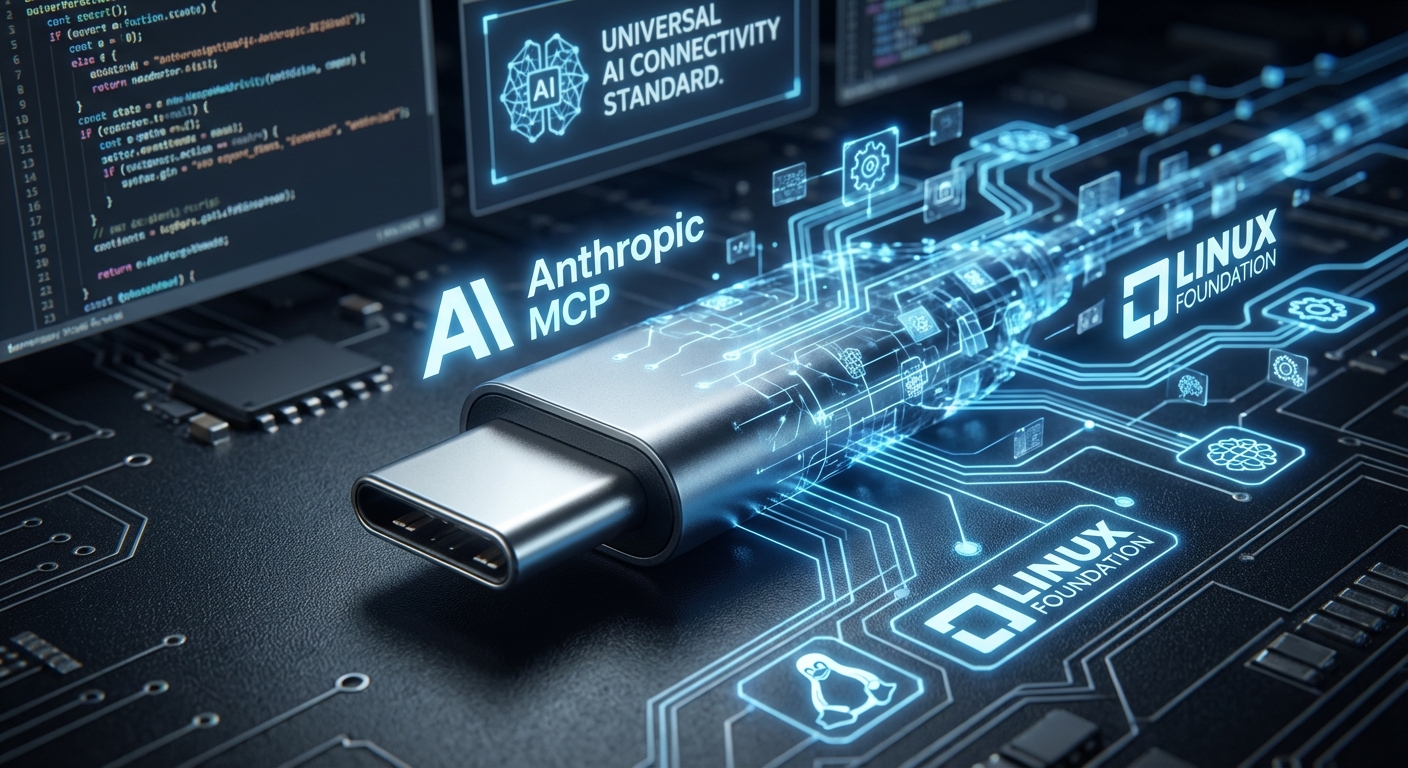
Anthropic's Model Context Protocol has emerged as the defining interoperability standard for the AI agent ecosystem in 2026. Originally developed to let Claude connect to external tools and data sources, MCP gained critical mass after Anthropic donated the specification to the newly formed Agentic AI Foundation under the Linux Foundation umbrella. The move transformed MCP from a single-company project into a vendor-neutral open standard. OpenAI and Microsoft subsequently announced full MCP support in their products, effectively ending the fragmentation that had plagued AI tool integration. Industry observers have begun calling MCP the "USB-C for AI" because it provides a universal interface through which any large language model can connect to any external service, database, or application. The rapid standardization has accelerated the development of AI agents across every sector, from coding assistants to browser automation to enterprise workflow tools.
The technical architecture of MCP is deceptively simple, which is precisely why it has achieved such rapid adoption. The protocol defines a standard JSON-RPC interface through which AI models can discover available tools, request their execution, and process the results — all without needing custom integration code for each tool or service. Before MCP, developers had to write bespoke connectors for every combination of AI model and external tool, creating an explosion of integration complexity. With MCP, a tool built once can be used by any compliant AI model from any provider. The community has responded enthusiastically, building over 10,000 MCP connectors covering databases (PostgreSQL, MongoDB, Snowflake), developer tools (GitHub, Jira, Linear), communication platforms (Slack, Discord, Teams), and enterprise SaaS applications (Salesforce, HubSpot, SAP). This rich ecosystem of connectors has made MCP the de facto plumbing layer for the emerging AI agent economy.
The decision to donate MCP to the Linux Foundation was a strategic masterstroke by Anthropic. By relinquishing control of the specification, the company removed the competitive objection that had prevented rivals from adopting the protocol. OpenAI integrated MCP support into the ChatGPT plugin system within weeks of the Linux Foundation announcement, and Microsoft followed by adding native MCP compatibility to Copilot Studio and Azure AI Services. Google's adoption came shortly after, with Gemini gaining MCP support through the Vertex AI platform. The resulting network effects have been enormous: as more tools support MCP, more AI applications build on it, which attracts more tool developers — a classic platform flywheel. Analysts at Forrester estimate that MCP-compatible tools will process over $50 billion in enterprise AI transactions by the end of 2026, cementing the protocol's position as essential infrastructure for the age of AI agents.
Sources
Linux Foundation, Anthropic, Wired