OpenAI Surpasses $25 Billion in Annualized Revenue, Eyes Late-2026 IPO as Anthropic Approaches $19 Billion
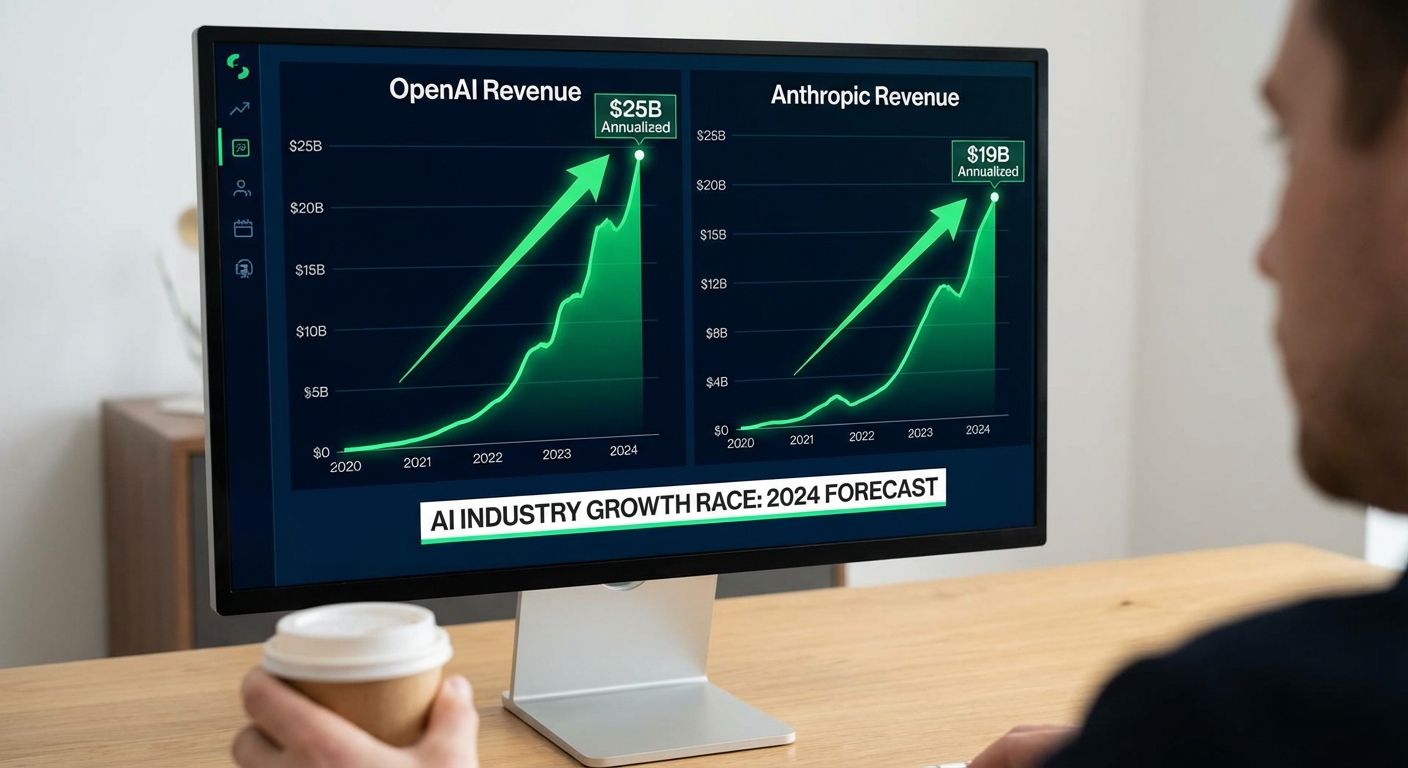
The business of artificial intelligence reached staggering new heights in early 2026. OpenAI disclosed that it has surpassed $25 billion in annualized revenue, driven by rapid enterprise adoption of ChatGPT and its API products across every major industry. The company is now actively preparing for an initial public offering expected in late 2026, which would make it one of the largest technology IPOs in history. Meanwhile, Anthropic is approaching $19 billion in annualized revenue, fueled by strong demand for Claude in enterprise settings and a wave of new consumer users.
OpenAI's revenue breakdown reveals a significant shift toward enterprise customers, who now account for approximately 62% of total revenue, up from 45% a year ago. The company's API business alone generates an estimated $9 billion annually, with financial services, healthcare, and legal sectors leading adoption. OpenAI's IPO preparations include transitioning from its unusual capped-profit structure to a more traditional corporate format, a move that has drawn scrutiny from early investors and nonprofit board members. Investment banks Goldman Sachs and Morgan Stanley are reportedly competing to lead the offering, which could value the company at over $300 billion.
The revenue trajectories of both companies underscore how quickly the generative AI market has matured from experimental technology into a core business infrastructure category, with machine learning and deep learning capabilities now embedded in everyday workflows across thousands of organizations worldwide. Total global spending on generative AI products and services is projected to exceed $120 billion in 2026, according to IDC, with OpenAI and Anthropic together capturing roughly 40% of the market. The duopoly's dominance has raised antitrust questions in both the U.S. and Europe, though regulators have so far focused their attention on the cloud computing partnerships that underpin these companies rather than their direct market positions.
Sources
Financial Times, Bloomberg, The Information