Trump's 90-Day Chip Tariff Deadline Expires — Broader Section 232 Levies Now Loom Over Semiconductor Industry
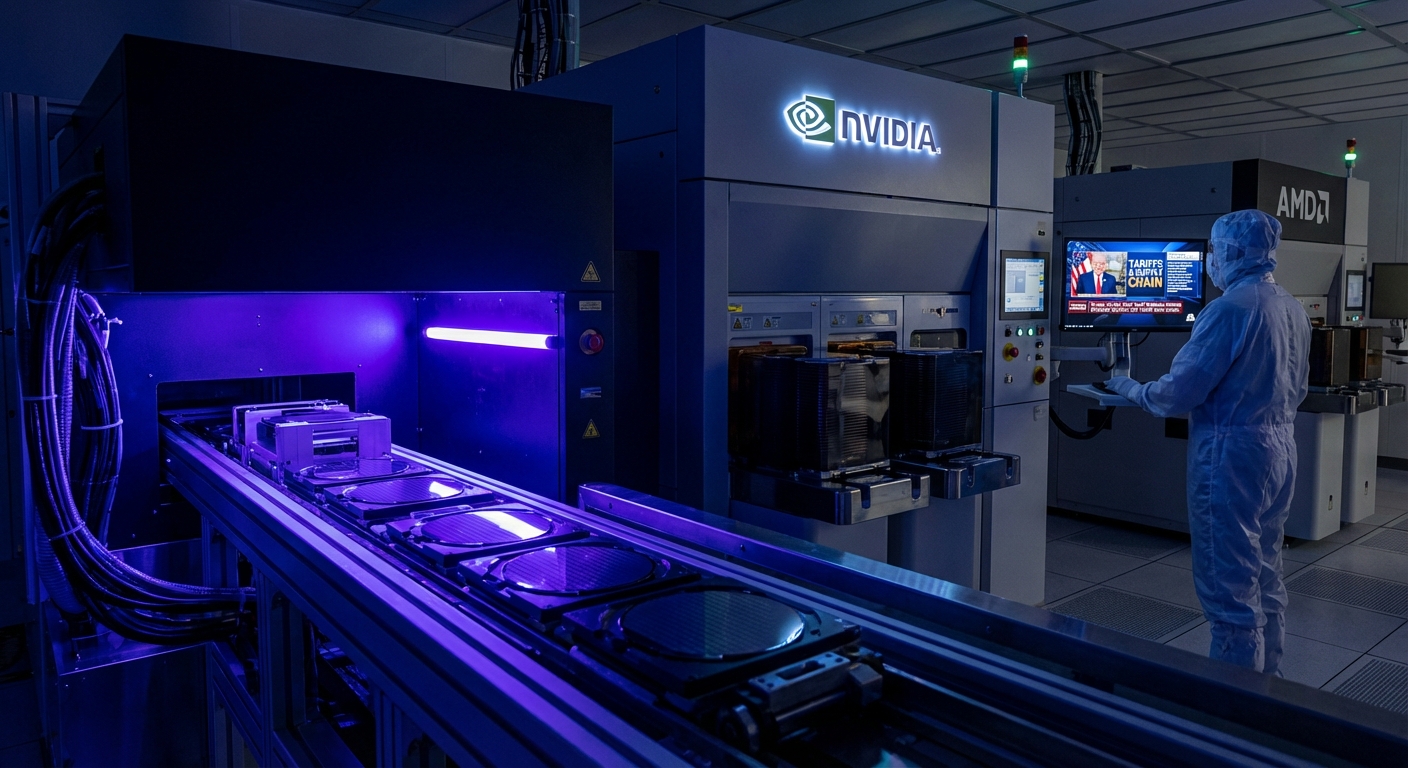
The 90-day window established by President Trump's January 2026 Section 232 semiconductor proclamation expired on April 14, 2026, with the Department of Commerce and USTR required to deliver a negotiation report to the White House. The initial proclamation imposed an immediate 25% tariff on a narrow class of advanced computing chips not contributing to domestic semiconductor manufacturing — specifically citing products such as the NVIDIA H200 and AMD MI325X. The 90-day review period was designed to allow trade negotiators to reach bilateral agreements that could exempt companies investing in US chip production from the tariff burden.
Now that the deadline has passed, President Trump is empowered to impose significantly broader tariffs on the entire semiconductor supply chain — encompassing chips, semiconductor manufacturing equipment, and their derivative products. The tariff framework includes an offset program that would grant preferential treatment to companies making qualifying US semiconductor investments, similar to the CHIPS Act incentive structure but deployed through trade policy rather than direct subsidies. Commerce Secretary Howard Lutnick has been the primary administration voice on semiconductor trade policy throughout the process, overseeing the negotiations that will determine whether a second, wider proclamation follows.
Industry observers are closely watching for Trump's next move. TSMC's $165 billion Arizona investment commitment and Samsung's ongoing US fab construction are partly a strategic response to this tariff framework, designed to qualify for offset treatment regardless of which direction the administration moves. The Taiwan Strait diversification trend is accelerating in parallel: DigiTimes reported on April 2 that TSMC is planning up to 12 fabs in Arizona as supply chains shift from passive geographic diversification to active US-anchored manufacturing. For chip designers such as NVIDIA and Qualcomm that rely heavily on TSMC Taiwan, the prospect of escalating tariffs represents a significant cost risk unless Arizona production capacity scales fast enough to absorb demand under preferential terms.
Sources
White House, White & Case, CNBC