AI Agents Go Mainstream — Enterprise Adoption Hits 40% of Fortune 500 Companies
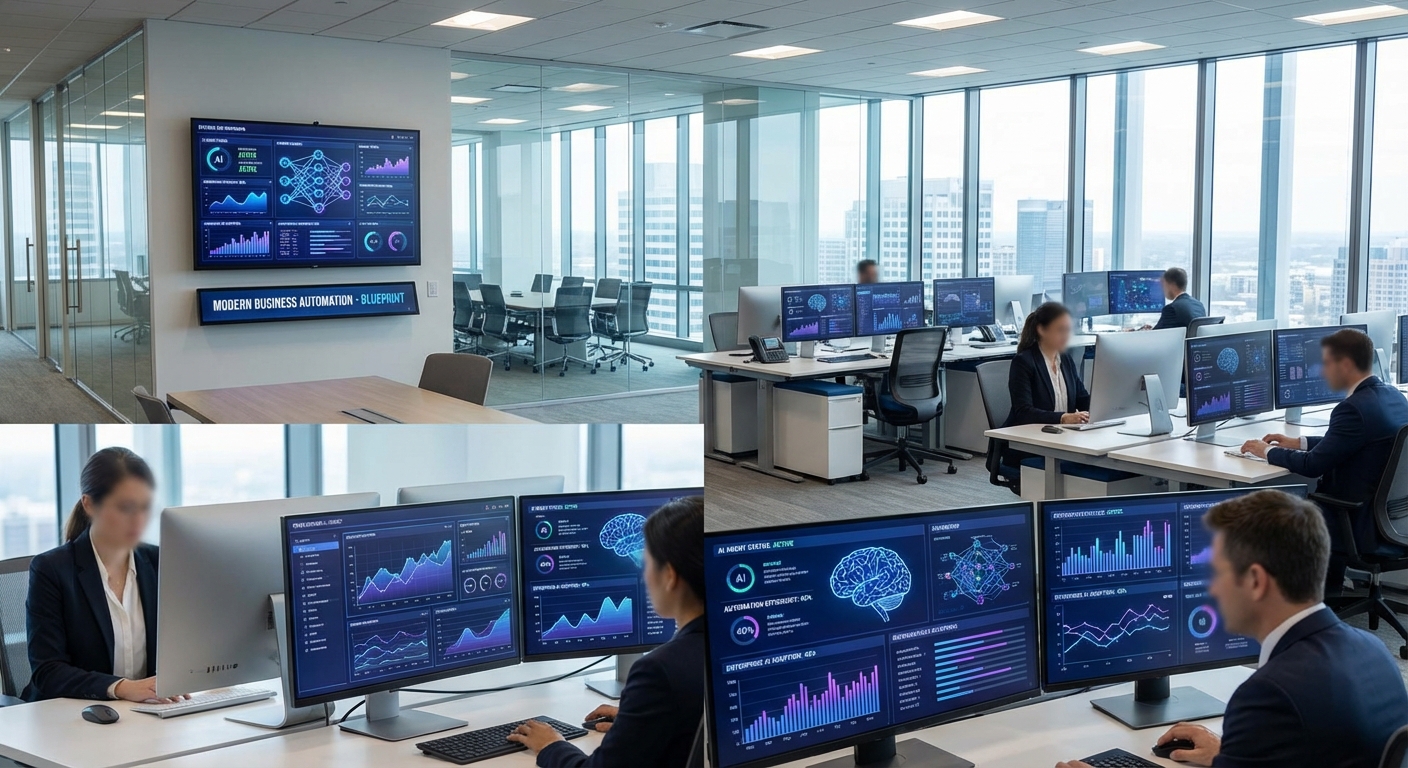
Autonomous AI agent systems have crossed a critical adoption threshold, with 40% of Fortune 500 companies now deploying them in production workflows according to a new McKinsey report. Salesforce's AgentForce platform, Microsoft's Copilot Agents, and Anthropic's Claude Computer Use capability are leading the charge, each offering distinct approaches to letting AI systems execute multi-step tasks with minimal human oversight. McKinsey estimates that AI agents could unlock $4.4 trillion in annual productivity gains globally as they automate complex workflows spanning customer service, supply chain management, financial analysis, and software development. However, the rapid deployment has intensified concerns about job displacement, with labor economists warning that white-collar roles in administration, data entry, and junior analysis are most immediately at risk. Several major corporations have already announced workforce restructuring plans citing AI agent capabilities, prompting calls from legislators on both sides of the Atlantic for updated labor protections and retraining programs to address the accelerating pace of automation.
The competitive landscape among enterprise AI agent platforms has crystallized around three distinct approaches. Salesforce's AgentForce leads in customer-facing deployments, with pre-built agent templates for sales, service, marketing, and commerce that integrate natively with the Salesforce ecosystem's 150,000+ enterprise customers. Microsoft's Copilot Agents leverage the company's dominant position in enterprise productivity software to embed AI automation directly within Teams, Outlook, and Dynamics 365, reaching over 400 million commercial Microsoft 365 users. Anthropic's Claude Computer Use takes a more horizontal approach, offering a general-purpose agent that can interact with any desktop application or web interface, making it particularly popular among companies with legacy software that lacks modern APIs. Each platform reports average time savings of 30-45% on targeted workflows, though the actual return on investment varies significantly depending on the complexity of the processes being automated and the quality of the underlying data.
The labor market implications have become the most politically charged aspect of the AI agent boom. A Bloomberg analysis of corporate earnings calls found that over 120 Fortune 500 companies mentioned AI-driven workforce restructuring in their Q1 2026 reports, with the financial services, insurance, and professional services sectors leading in planned headcount reductions. The International Labour Organization estimates that approximately 14% of global office jobs could be substantially automated by current-generation AI agents, though it notes that historical precedent suggests technology-driven displacement is typically offset by new job creation within a five-to-ten-year window. In response, the EU has proposed amendments to its AI Act requiring companies to conduct employment impact assessments before deploying autonomous agents, while the U.S. Department of Labor has launched a $2 billion workforce transition initiative focused on retraining workers in sectors most affected by AI automation. The tension between productivity gains and employment disruption is likely to define the political debate around artificial intelligence for years to come.
Sources
McKinsey, Salesforce, Microsoft, Bloomberg