Intel Foundry Now Has 4 External Customers — 18A Powers Panther Lake and Clearwater Forest at Fab 52
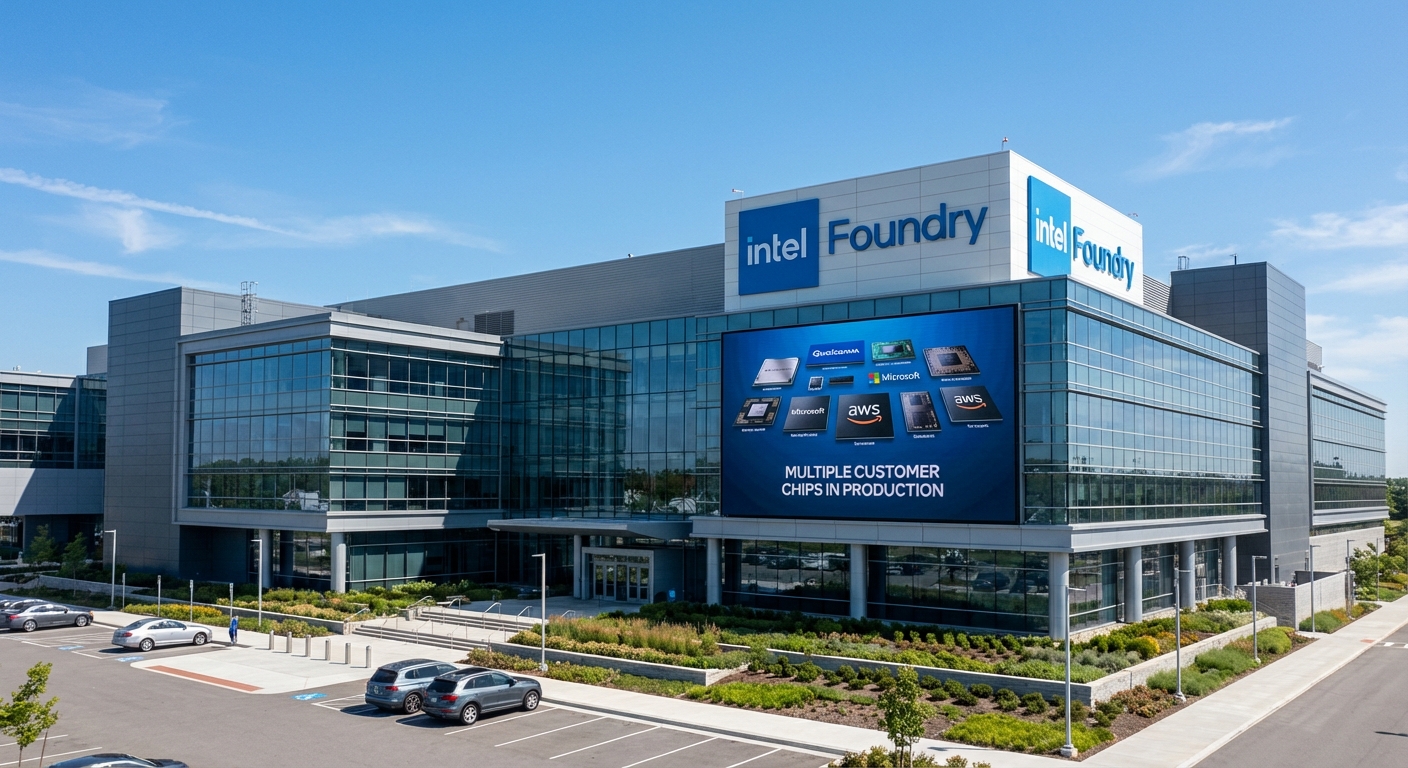
Intel Foundry Services has confirmed that it now has four external customers committed to using its manufacturing capabilities, a meaningful milestone for a business unit that only began courting outside clients in earnest three years ago. The Intel 18A process node is being used internally for both Panther Lake consumer processors and Clearwater Forest server chips, with production running at Fab 52 in Chandler, Arizona. While Intel has not disclosed the identities of all external customers, the IBM win and ongoing discussions with NVIDIA suggest the company is making progress in its ambition to become a top-three foundry by 2030.
Sources familiar with Intel's foundry pipeline indicate that in addition to IBM, the four external customers include at least one major U.S. defense contractor and one European automotive chipmaker, both drawn to Intel's U.S.-based manufacturing for supply chain security reasons. The fourth customer is believed to be a mid-sized fabless AI chip startup that valued Intel's willingness to offer lower minimum order quantities than TSMC, which typically requires commitments of 10,000+ wafers per quarter for leading-edge nodes. Intel Foundry's revenue from external customers is expected to reach $1 billion in 2026, a modest figure compared to TSMC's $80+ billion but a significant proof point for the viability of Intel's foundry strategy.
The foundry market remains overwhelmingly dominated by TSMC, which commands roughly 60% market share, but Intel's combination of U.S.-based manufacturing and competitive process technology is attracting interest from customers concerned about geographic concentration of chip manufacturing in East Asia. Intel CEO Lip-Bu Tan has set a target of $10 billion in external foundry revenue by 2030, which would require winning at least 2-3 additional marquee customers in the next 18 months. The company's pitch centers on three pillars: the technical competitiveness of 18A and upcoming 14A nodes, the geopolitical advantage of domestic U.S. manufacturing, and generous capacity guarantees that TSMC's oversubscribed fabs cannot match. Whether Intel can execute on this ambitious plan while simultaneously fixing its own product competitiveness issues remains the central question for the company's future.
Sources
Intel, The Information, AnandTech