Sony PSSR 2 vs. NVIDIA DLSS 5 — The Upscaler War Heats Up on the Same Day
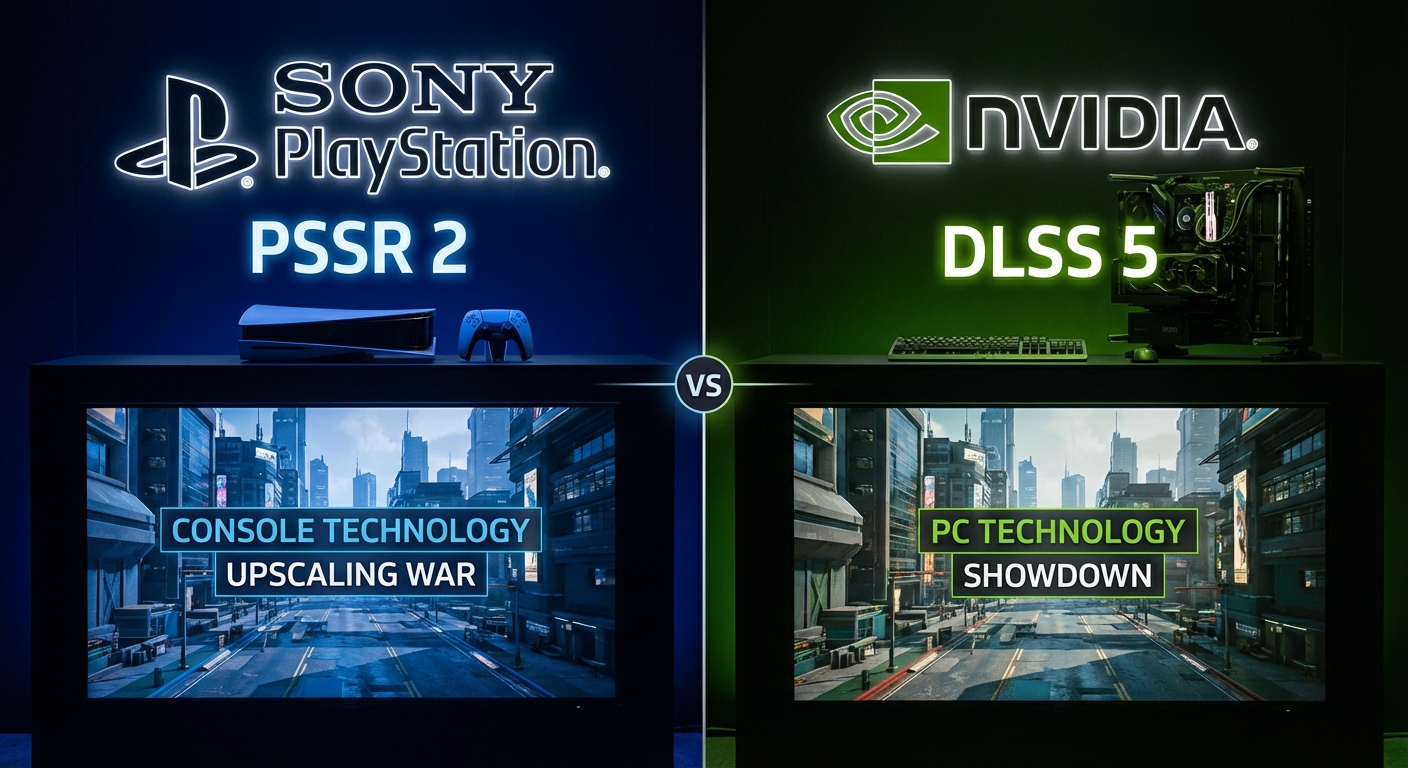
In a remarkable coincidence of timing, Sony rolled out PSSR 2 for the PS5 Pro on the same day NVIDIA unveiled DLSS 5 at GTC 2026, sparking immediate comparisons between the two AI-driven rendering technologies. PSSR 2, co-developed with AMD through their Project Amethyst partnership, focuses on cleaning up image stability and eliminating the shimmer and ghosting artifacts that plagued the first version. DLSS 5 takes a fundamentally different approach by using generative AI to synthesize entirely new visual detail. Early analysis suggests PSSR 2 now rivals DLSS 4.5 quality at normal viewing distances on a 4K display, while DLSS 5 represents a forward-looking bet on neural rendering that remains months from consumer readiness.
Digital Foundry's side-by-side comparison across six titles revealed that PSSR 2 eliminates approximately 90% of the temporal shimmer artifacts present in the original PSSR implementation. In games like Ratchet & Clank: Rift Apart and Horizon Forbidden West, fine details such as hair strands, chain-link fences, and distant foliage now remain stable during camera movement — a dramatic improvement that was the most requested fix from PS5 Pro owners. The technology achieves this through a new motion-adaptive temporal accumulation buffer that intelligently blends data from up to 16 previous frames, compared to PSSR 1's four-frame window. Sony's Mark Cerny has described the approach as "maximizing the information already present in the rendering pipeline rather than hallucinating new data."
The console gaming and PC gaming communities have been debating the merits of each approach ever since. PSSR 2's chief advantage is its universal availability — it works across all PS5 Pro-enhanced titles via a system-level toggle with no developer patching required, and it runs on hardware that costs $699 versus the $1,999 RTX 5090. However, DLSS 5's neural rendering approach can generate detail that simply does not exist in the source render, creating effects like realistic caustic light patterns in water and subsurface scattering on skin that would otherwise require full path tracing. Analysts at Niko Partners project that the upscaler war will drive an additional 8 million PS5 Pro units sold in 2026, as Sony positions the console as the accessible alternative to increasingly expensive PC gaming hardware.
Sources
Digital Foundry, PlayStation Blog