Anthropic Launches the Anthropic Institute to Study AI's Broader Societal Impacts
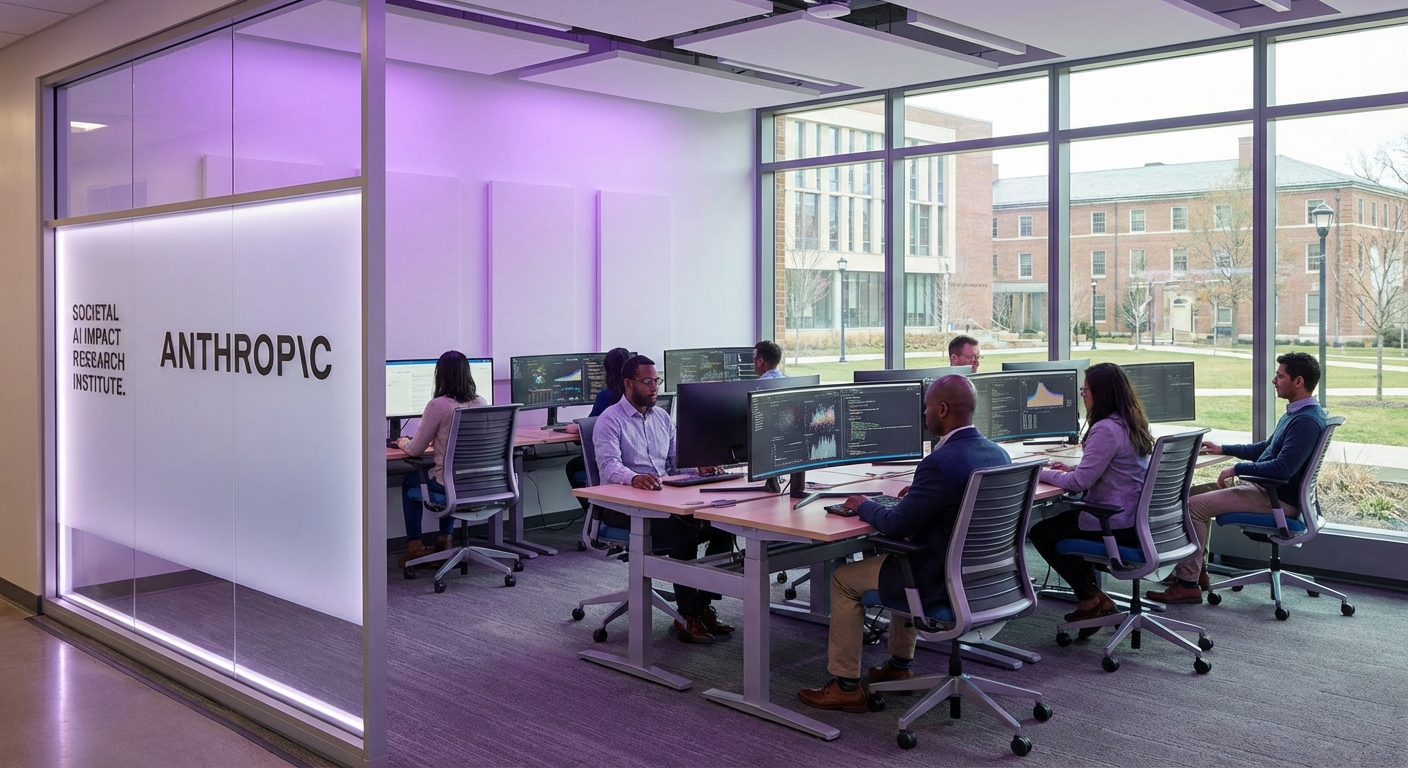
Anthropic announced the formation of the Anthropic Institute, a dedicated research body focused on understanding how artificial intelligence reshapes labor markets, education, governance, and public discourse. The Institute operates with editorial independence from Anthropic's commercial division and has recruited researchers from economics, sociology, political science, and AI safety disciplines. Its initial research agenda includes longitudinal studies on how generative AI tools affect productivity and employment across different skill levels, as well as frameworks for measuring the societal benefits and risks of large language model deployment at scale. The launch positions Anthropic as the first major frontier model developer to establish an in-house institution explicitly dedicated to studying the downstream consequences of the technology it builds, going beyond the technical AI safety research that has defined the company since its founding.
The Institute's founding team includes over 30 researchers drawn from leading universities and policy organizations, including former economists from the Federal Reserve and World Bank, sociologists who study technology adoption, and political scientists specializing in democratic governance. The initial research budget is reported at $50 million over three years, funded entirely by Anthropic but governed by an independent advisory board that includes academics with no financial ties to the company. The first wave of research projects focuses on three areas: measuring how AI coding assistants affect junior developer skill acquisition, studying the impact of AI-generated content on local news ecosystems, and developing economic models that predict labor market disruptions from autonomous AI agents across different industries and geographies.
The Anthropic Institute's creation reflects a growing recognition within the AI industry that technical safety research alone is insufficient to address the full spectrum of societal impacts from increasingly capable AI systems. While alignment research focuses on ensuring models behave as intended, the Institute aims to understand what happens after well-aligned models are deployed at scale — how they change work patterns, reshape educational institutions, influence political discourse, and alter economic structures. Several other AI labs have expressed interest in establishing similar research bodies, and the EU AI Office has cited the Institute as a model for the kind of proactive societal impact assessment it wants to see from frontier model developers under the AI Act. Critics have questioned whether an industry-funded institute can maintain true independence, but early supporters argue that having researchers embedded within the company gives them access to data and insights that external academics cannot obtain.
Sources
Anthropic, MIT Technology Review