TSMC Locks 50%+ of CoWoS Capacity Through 2027 for NVIDIA — Google Forced to Cut TPU Targets
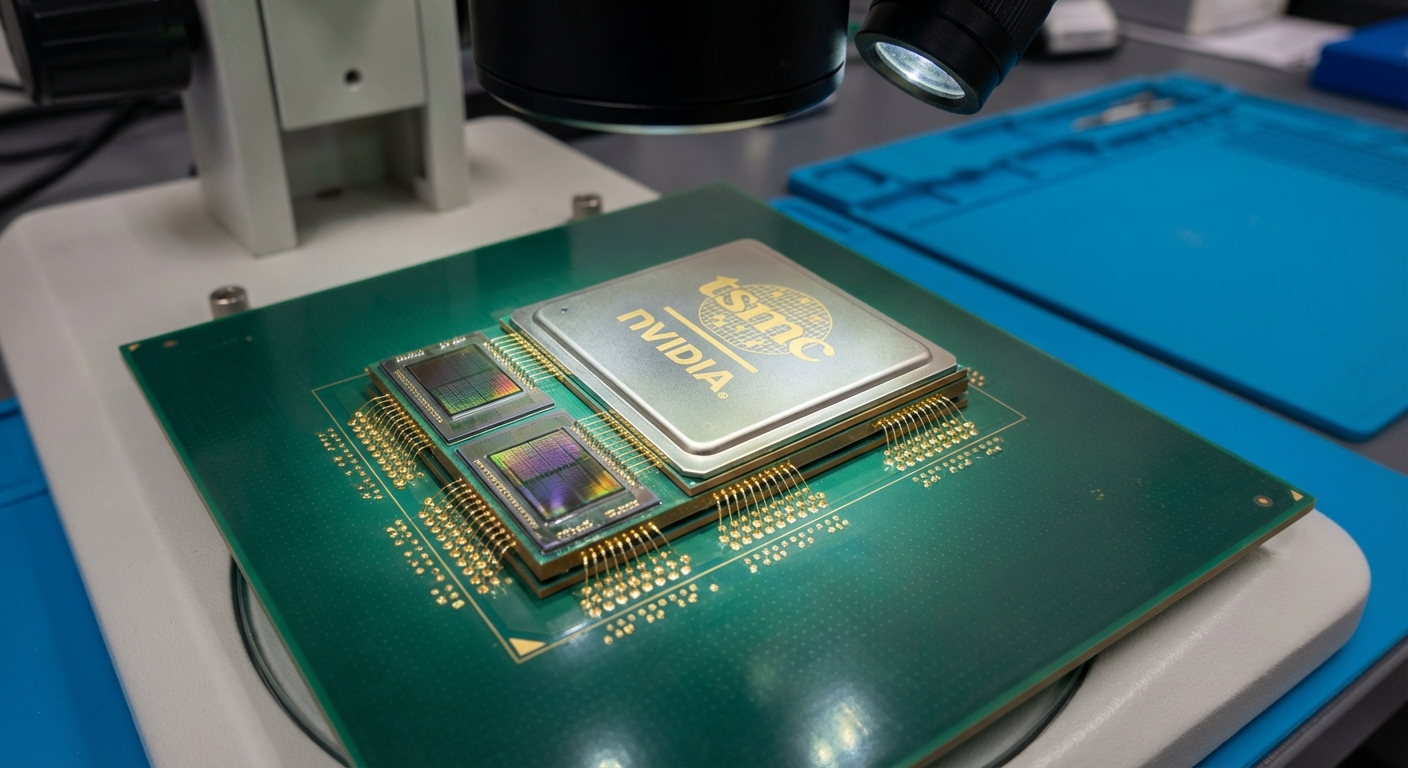
TSMC's CoWoS (Chip-on-Wafer-on-Substrate) advanced packaging platform has become the single most contested resource in the semiconductor supply chain. NVIDIA has secured commitments for more than 50% of TSMC's total CoWoS capacity through 2027, reflecting the staggering demand for its H200, B200, and upcoming Rubin-series data center GPUs. The lock-up is valued at an estimated $12-15 billion in packaging services revenue alone, separate from the silicon wafer processing fees. TSMC's CoWoS capacity has expanded from 15,000 wafer equivalents per month in early 2025 to approximately 40,000 wafer equivalents per month currently, yet demand still exceeds supply by an estimated 30%.
The lock-up has created a ripple effect across the industry: Google has reportedly been forced to reduce its TPU production targets due to insufficient CoWoS allocation, while other hyperscalers including Amazon and Microsoft are competing for the remaining slots. AMD's MI400 ramp has also been constrained by packaging availability rather than wafer supply, a frustrating bottleneck for a company that finally has a competitive AI accelerator product. Broadcom, which designs custom AI chips for Google and other hyperscalers, has had to delay at least two major customer programs due to CoWoS allocation limitations.
TSMC is aggressively expanding CoWoS capacity with three new advanced packaging facilities under construction in Taiwan, but the technology requires specialized equipment and cleanroom space that cannot be deployed overnight. The advanced packaging bottleneck has become a more significant constraint than the silicon wafer supply itself for AI accelerator production — a paradigm shift that has caught many industry observers off guard. TSMC's advanced packaging revenue is projected to reach $15 billion in 2026, up from $4 billion in 2023, making it one of the fastest-growing segments in the entire semiconductor industry. The packaging bottleneck has also opened a strategic window for competitors: Samsung's I-Cube and Intel's EMIB/Foveros technologies are being evaluated by customers who cannot secure sufficient TSMC CoWoS allocation, potentially breaking TSMC's near-monopoly in advanced AI chip packaging.
Sources
DigiTimes, The Information, SemiAnalysis