DLSS 5 Demo Required Two RTX 5090s — NVIDIA Promises Single-GPU Optimization by Fall Launch
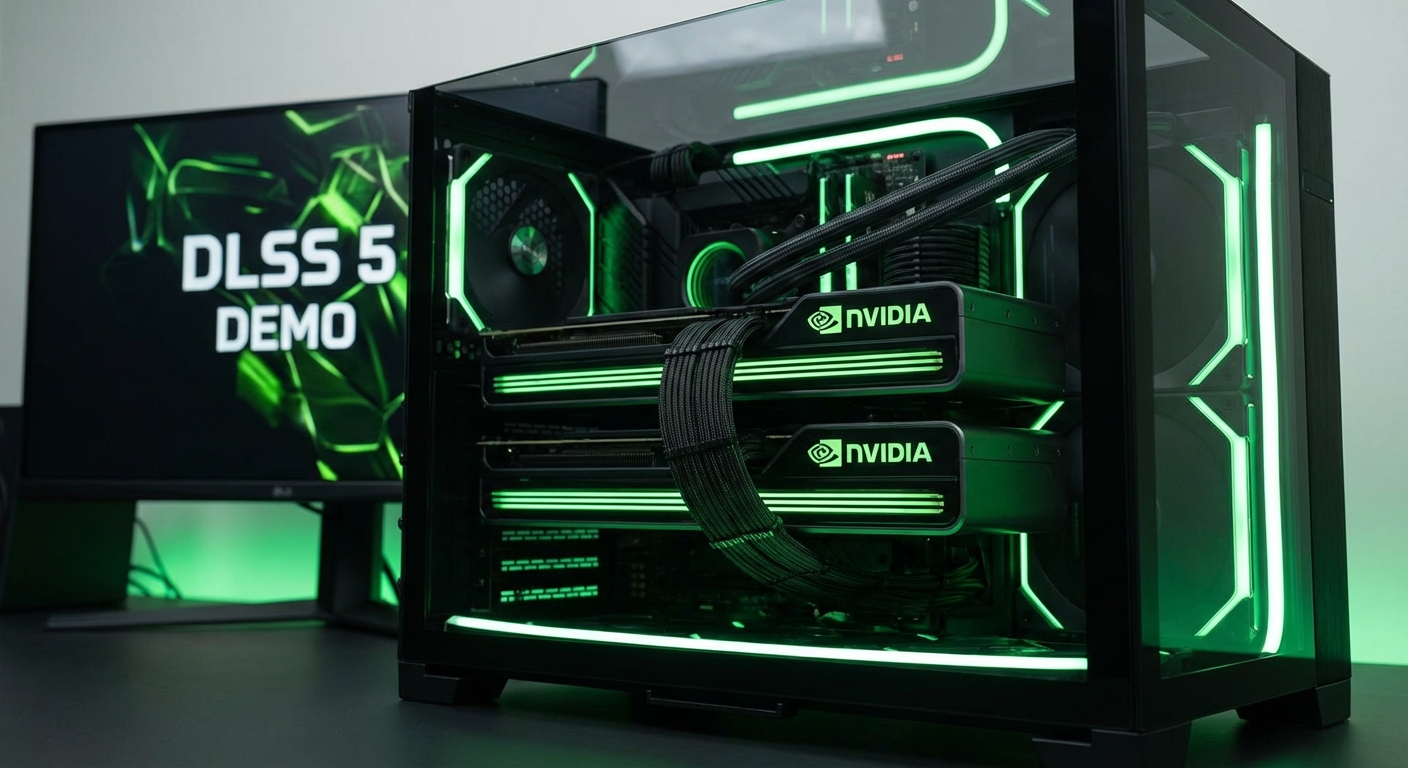
Digital Foundry's hands-on analysis revealed that NVIDIA's GTC 2026 demo of DLSS 5 neural rendering ran on a system with two GeForce RTX 5090 GPUs — one rendering the game, the other dedicated to running the AI model. The revelation sparked debate about real-world viability, with some viewers initially mistaking the demo for an early April Fool's joke. NVIDIA confirmed the fall 2026 launch will target single-GPU operation through optimization of the model's VRAM footprint and compute requirements. Sixteen titles have committed to launch support, including Starfield, Hogwarts Legacy, Assassin's Creed Shadows, and Phantom Blade Zero. Community reception has been mixed, with concerns about frame-to-frame consistency and the AI "acting as an art director" rather than honoring the original artistic intent.
NVIDIA's optimization roadmap centers on model compression and VRAM management. The GTC demo used a full-precision neural rendering model occupying approximately 18GB of VRAM on the dedicated second GPU. For single-GPU operation, NVIDIA plans to deploy a quantized INT8 version of the model that reduces the VRAM footprint to roughly 6-8GB, leaving the remaining 24GB of the RTX 5090's 32GB pool for the game itself. Engineers at NVIDIA have also developed a dynamic scheduling system that time-slices the GPU's Tensor Cores between game rendering and neural inference on alternating frames, reducing throughput by an estimated 15-20% compared to the dual-GPU setup but keeping the technology accessible to single-card owners. NVIDIA VP Bryan Catanzaro acknowledged in a post-GTC interview that "the demo showed the ceiling of what's possible — shipping is about finding the right balance between quality and accessibility."
The artistic integrity debate has been particularly heated among game developers. Several art directors at major studios have expressed concern that DLSS 5's generative approach could override deliberate artistic choices — for example, adding realistic subsurface scattering to characters that were intentionally designed with stylized flat shading. NVIDIA has responded by introducing an "Artist Override" API that lets developers flag specific materials, shaders, and lighting setups as exempt from neural enhancement. Despite the controversy, 16 launch titles remain committed, and early hands-on impressions from developers with access to pre-release builds have been largely positive, with Capcom's RE Engine team reportedly calling the technology "transformative for horror lighting."
Sources
Digital Foundry, TechRadar, WCCFTech, VideoCardz