GPT-5.4, Gemini 3.1 Pro, and Claude Opus 4.6 Reshape the Frontier Model Landscape in Q1 2026
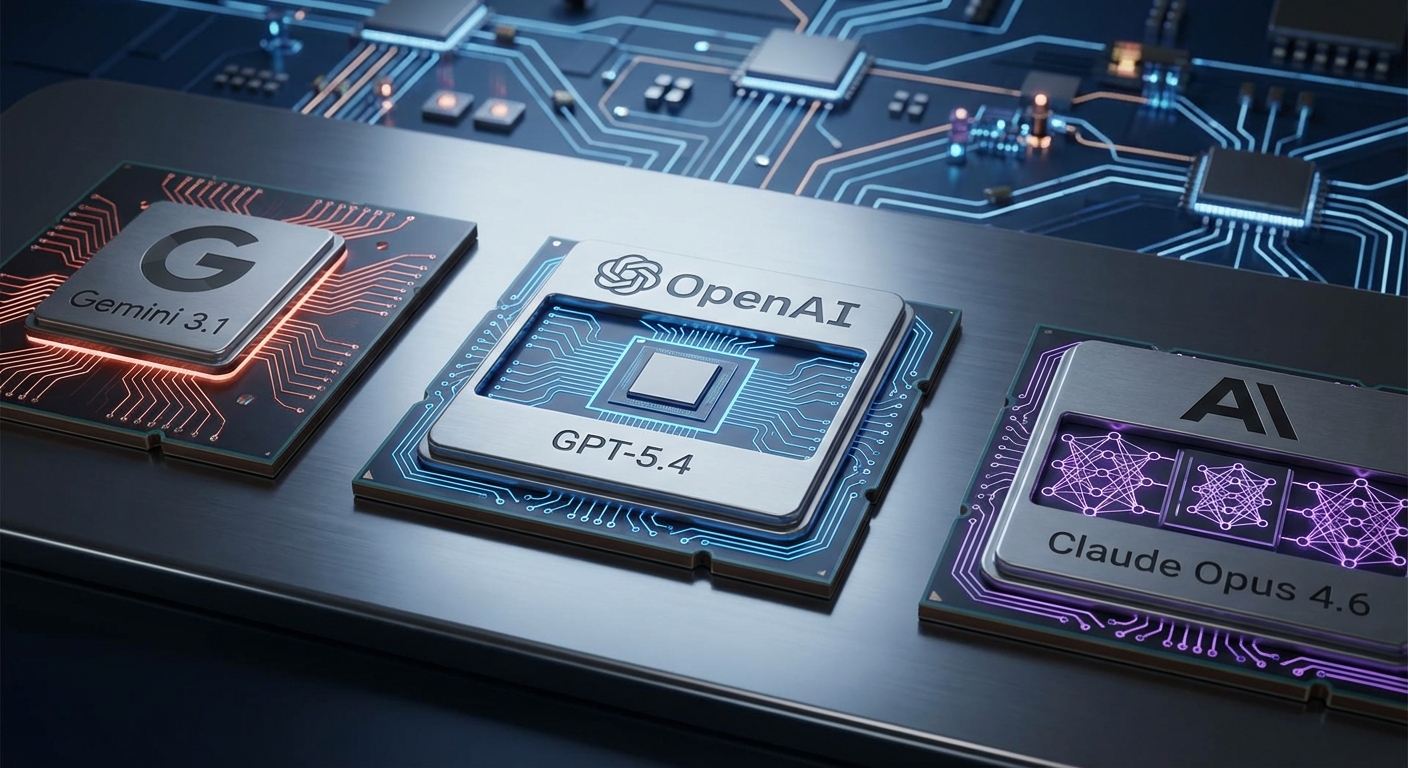
The first quarter of 2026 delivered a rapid-fire sequence of frontier model releases that redefined the competitive landscape of generative AI. Google's Gemini 3.1 Pro debuted at the top of the AI Index leaderboard with a score of 57 points, tied with OpenAI's GPT-5.4 Pro for the overall lead. Anthropic responded with Claude Opus 4.6, which may not have matched the raw benchmark numbers but introduced a groundbreaking one-million-token context window, enabling the processing of entire codebases and multi-hundred-page documents in a single conversation. The three-way competition between OpenAI, Google DeepMind, and Anthropic has intensified as each company pursues different strategies: OpenAI focusing on broad consumer reach, Google on deep integration with its product ecosystem, and Anthropic on safety-first development of large language models with industry-leading context and reasoning capabilities.
Benchmark performance tells only part of the story. In real-world enterprise evaluations conducted by independent testing firms, Claude Opus 4.6 led in agentic coding tasks by a 12% margin, while GPT-5.4 Pro excelled in multilingual translation and creative writing benchmarks. Gemini 3.1 Pro's 77.1% score on ARC-AGI-2 represented the highest reasoning benchmark ever achieved by a commercial model, though critics noted the test's limitations in measuring practical intelligence. The rapid iteration cycle — with all three labs shipping major updates within a six-week window — has made it increasingly difficult for enterprise customers to commit to a single provider, driving demand for model-agnostic orchestration platforms.
The implications for the broader industry are profound. Smaller AI startups have seen funding dry up by an estimated 35% as investors consolidate bets on the three frontrunners, according to PitchBook data. Meanwhile, open-source alternatives from Meta (Llama 4) and Xiaomi are narrowing the gap with closed models, creating a two-tier market where cutting-edge capabilities command premium pricing while "good enough" AI becomes increasingly commoditized. The frontier model race has also driven unprecedented demand for compute infrastructure, with all three companies reportedly spending over $10 billion annually on GPU clusters and custom silicon to maintain their competitive positions.
Sources
AI Index, OpenAI, Google DeepMind, Anthropic