Intel and AMD Plan 10–15% CPU Price Hikes in April 2026; STMicroelectronics Also Raising Costs
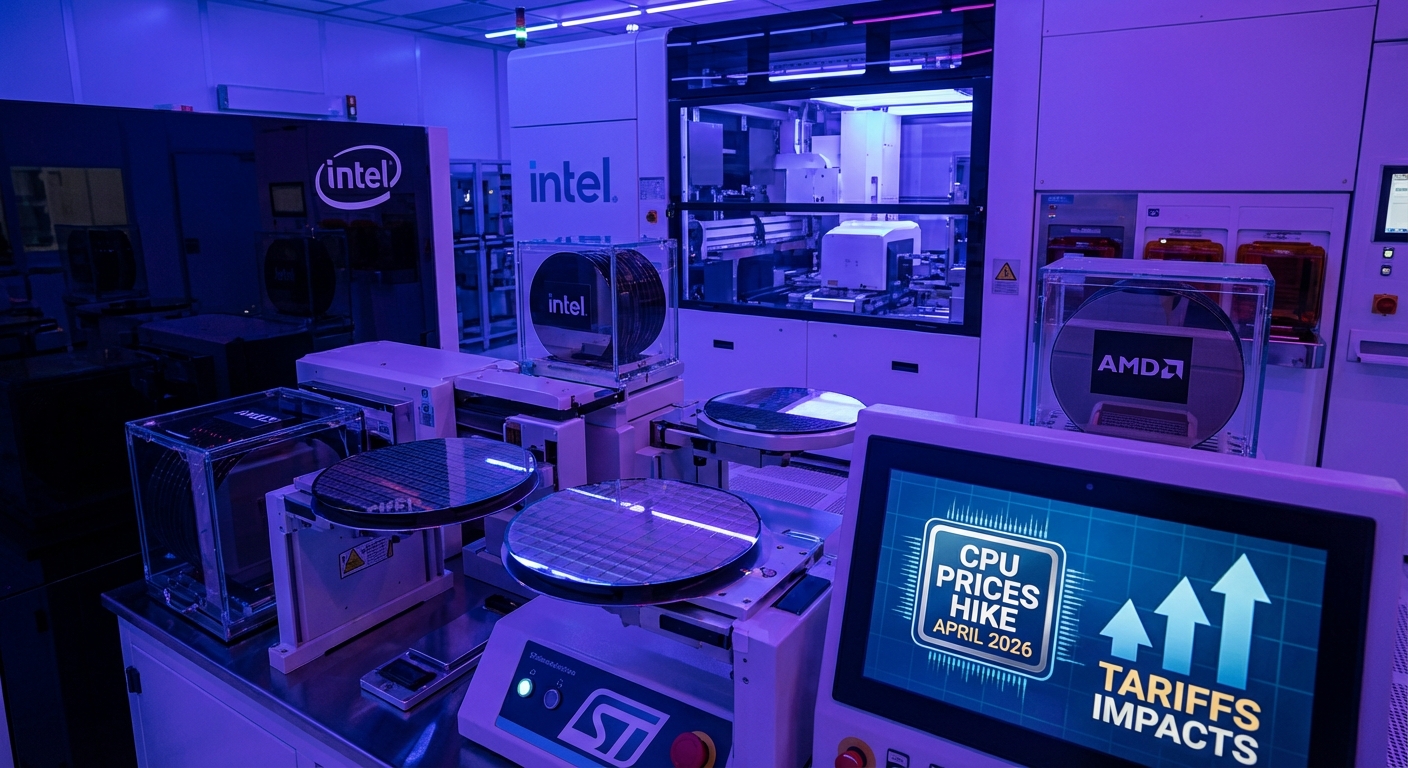
According to supply-chain intelligence firm TrendForce, both Intel and AMD have informed distribution channel partners of planned CPU price increases of 10–15% taking effect in April 2026, citing rising manufacturing costs, ongoing tariff pressures across the semiconductor supply chain, and tighter wafer supply at leading-edge nodes driven by AI workload demand. STMicroelectronics separately issued a formal price-increase letter to customers confirming broad hikes across multiple product lines starting April 26, citing higher material costs from upstream suppliers, elevated energy and transportation expenses, and the need to secure additional capacity at outsourced semiconductor assembly and test (OSAT) providers.
The price hikes arrive as the semiconductor industry navigates a complex tariff environment shaped by the Trump administration's ongoing trade policy. While the US-Taiwan trade deal signed in January 2026 reduced duties on Taiwanese chips to 15%, costs throughout the supply chain have climbed as leading foundries execute record capital expenditure — TSMC alone budgeted up to $56 billion for 2026 — to expand leading-edge capacity for AI chips. Some of that infrastructure investment is being passed through to customers via higher wafer pricing and surcharges on advanced packaging services such as CoWoS and SoIC, which are increasingly required for high-performance CPU and AI chip configurations.
For PC builders, workstation customers, and enterprise procurement teams, the April price increases signal that the period of CPU deflation seen in 2024–2025 is definitively over. TrendForce analysts noted that desktop and workstation CPU segments will feel the increases most acutely, while server CPU pricing — already elevated by AI server demand — is expected to see more modest adjustments, as hyperscaler contracts typically lock in pricing on longer cycles. AMD is reportedly managing the increases more carefully than Intel to protect its recently gained market share in both client and server segments, though both companies face the same underlying cost pressures from TSMC's N3 and N2 node wafer price increases set for 2026.
Sources
TrendForce