Intel Panther Lake Debuts at CES 2026 on 18A Process — GPU and IO Dies by TSMC
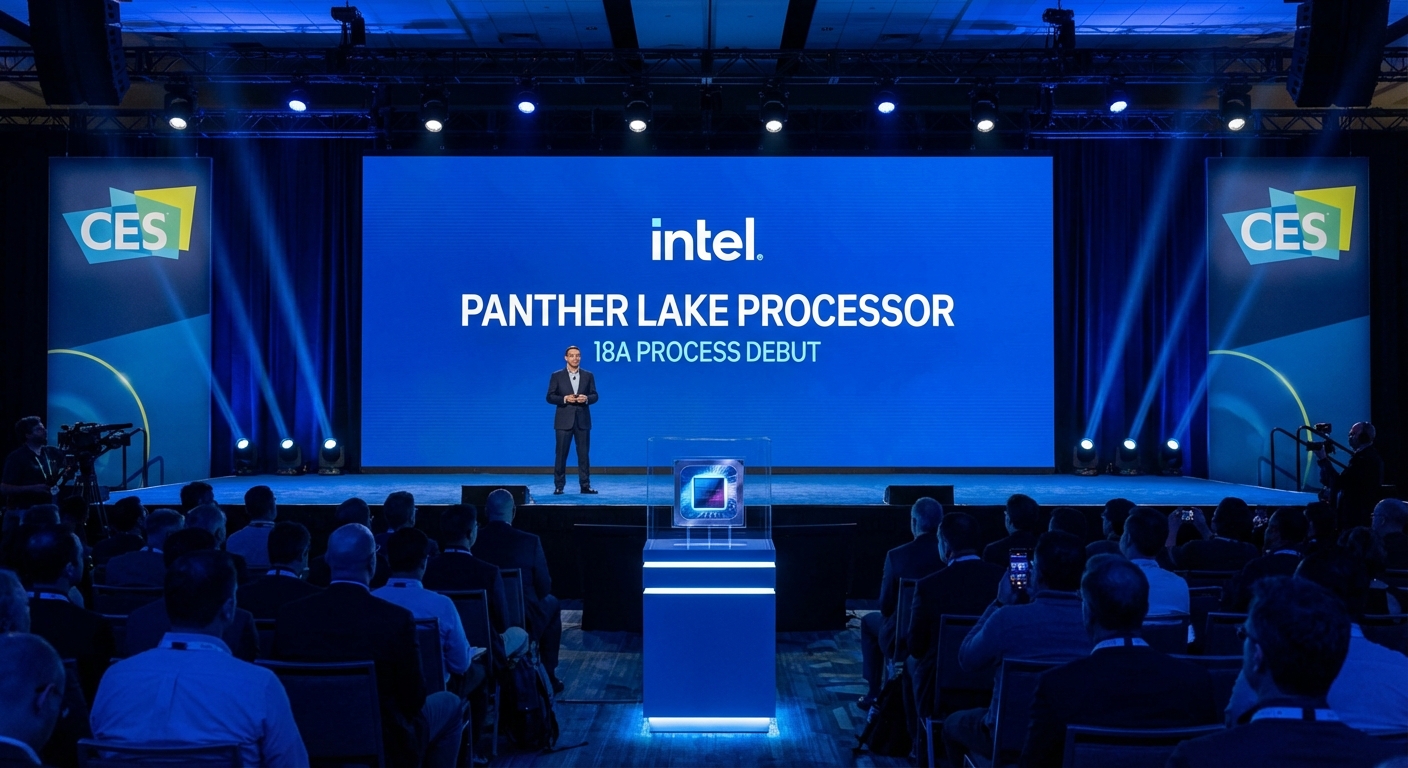
Intel showcased its Panther Lake processors at CES 2026, marking the commercial debut of the Intel 18A process node and a pivotal moment for the company's foundry ambitions. The CPU compute tiles are manufactured internally on 18A at Intel's Fab 52 in Arizona, while the integrated GPU die is produced on TSMC's N3E node and the IO die on TSMC's N6. This chiplet-based approach reflects Intel's pragmatic strategy of using the best available process node for each functional block rather than forcing everything onto a single technology. The Panther Lake SoC integrates up to 8 performance cores and 16 efficiency cores, delivering a total of 24 threads with a maximum boost clock of 5.8 GHz on the P-cores.
Panther Lake targets the premium laptop segment and is expected to ship in volume through mid-2026, with desktop variants following later. The 18A node incorporates both RibbonFET and PowerVia technologies, and Intel says power efficiency gains exceed 20% compared to the previous generation. The PowerVia backside power delivery is particularly noteworthy — by routing power connections underneath the transistor layer rather than competing for space with signal routing on top, Intel claims a 6% frequency improvement at the same voltage and significantly improved power delivery integrity under heavy workloads. This architectural innovation is one area where Intel has a genuine lead over TSMC, which is not expected to implement backside power delivery until its A16 node.
The CES 2026 demonstration included live benchmarks showing Panther Lake outperforming both AMD's Strix Point and Apple's M4 in select AI inference workloads, thanks to the integrated NPU delivering 45 TOPS independently — enough to run large language models locally without cloud connectivity. Intel's AI PC strategy is centered on the proposition that on-device AI processing will become a killer feature for enterprise and creative professionals. Over 200 OEM laptop designs are in development, with pricing expected to range from $999 to $2,499 depending on configuration. The critical question remains whether consumers and enterprises will pay a premium for Intel's AI capabilities, or whether the market will continue to prioritize battery life and thin-and-light form factors where Apple's Arm-based M-series chips currently dominate.
Sources
Intel, AnandTech, Tom's Hardware