Iran Conflict Sends Shockwaves Through Global Semiconductor Industry — Strait of Hormuz Disruption Threatens $580 Billion Chip Supply Chain
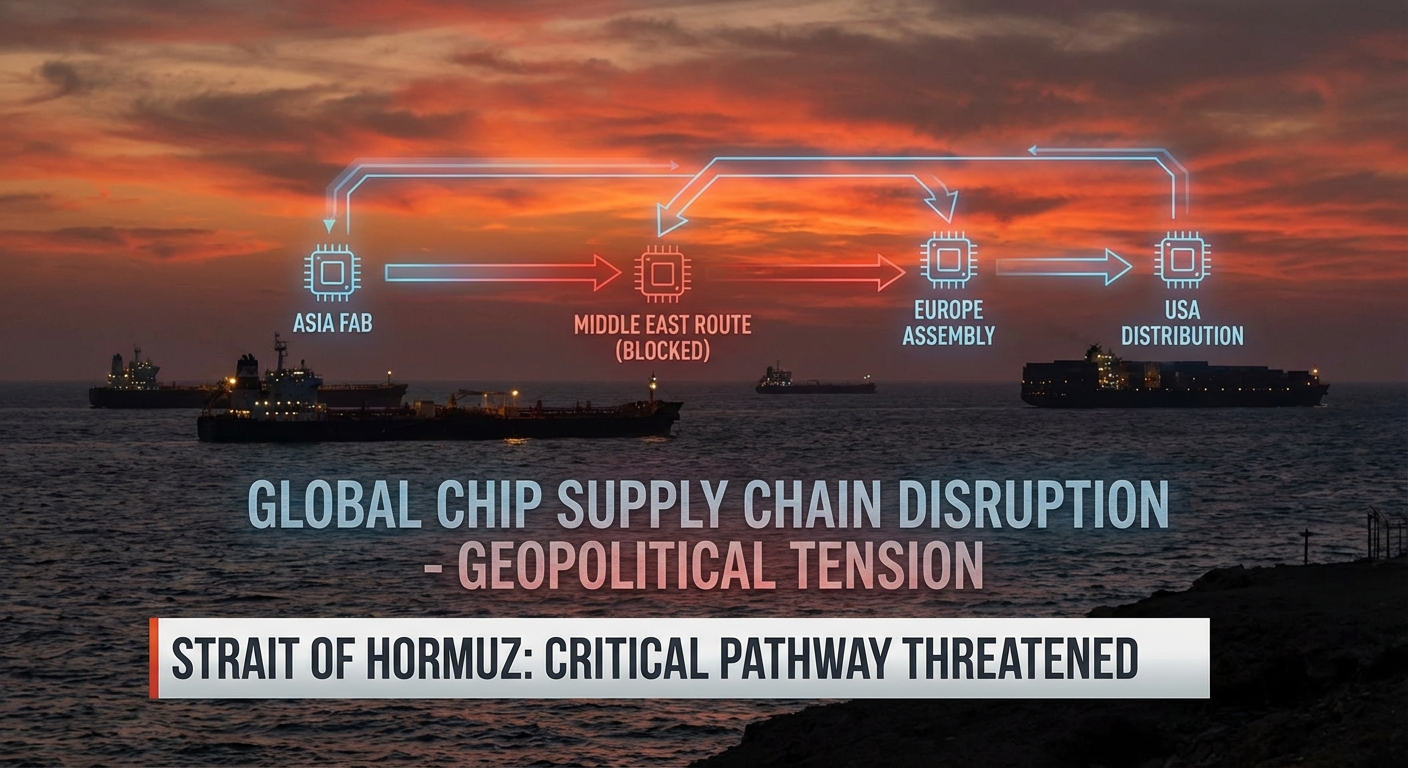
The escalating military conflict involving Iran has triggered the most significant geopolitical disruption to the global semiconductor supply chain since the COVID-19 pandemic. With naval operations near the Strait of Hormuz — through which approximately 20% of the world's oil passes daily — crude prices have surged past $125 per barrel, sending energy costs soaring across chip fabrication facilities worldwide. TSMC, Samsung, and Intel fabs consume enormous amounts of electricity, and the ripple effects of energy inflation are now being felt across the entire $580 billion semiconductor value chain. Shipping routes through the Persian Gulf and Red Sea corridor have been rerouted or delayed, adding 2-3 weeks to component delivery timelines for critical materials including neon gas, palladium, and specialty chemicals used in chip manufacturing. Defense semiconductor demand has simultaneously spiked 60% year-over-year, with the Pentagon activating emergency procurement channels for guidance systems, radar chips, and secure communications silicon. Analysts at Goldman Sachs estimate the conflict could shave $40-60 billion from global semiconductor revenue in 2026 if hostilities persist beyond Q3, while simultaneously accelerating the West's push for domestic chip manufacturing independence.
Sources
Reuters, Bloomberg, Goldman Sachs, SEMI