Pentagon Activates Emergency Chip Procurement — Defense Semiconductor Orders Spike 60% as Iran Conflict Escalates
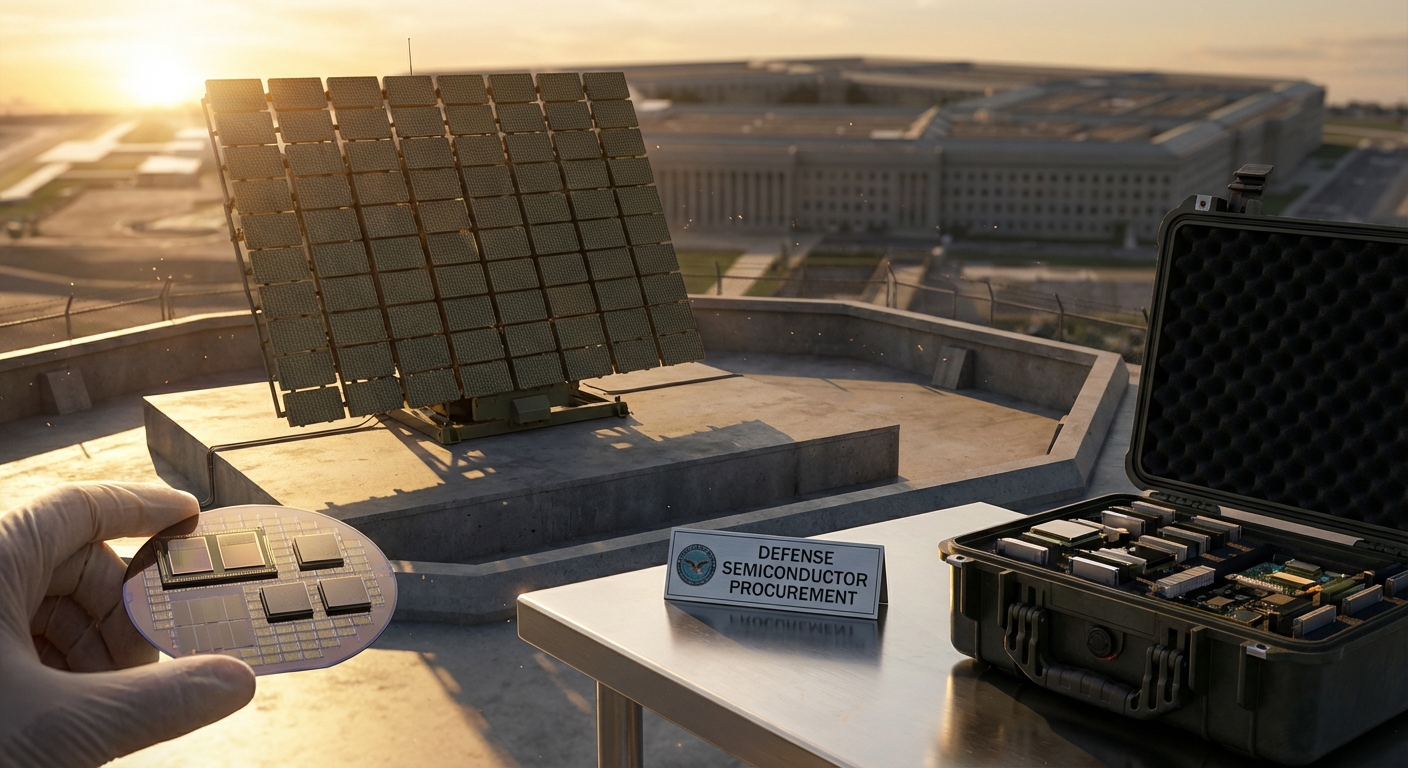
The U.S. Department of Defense has activated emergency procurement protocols for radiation-hardened and military-grade semiconductors, with defense chip orders surging 60% year-over-year since the Iran conflict intensified. The Pentagon's primary concern centers on precision-guided munitions, which require specialized FPGAs and ASICs manufactured on trusted foundry processes, and electronic warfare systems that depend on gallium nitride (GaN) and silicon carbide (SiC) chips. Northrop Grumman, Raytheon, and Lockheed Martin have all placed expedited orders with defense-qualified foundries including GlobalFoundries' Fab 9 in Vermont and Intel's secure enclave at Fab 52. The Trusted Foundry program, which ensures chips for classified systems are manufactured domestically, is now operating at maximum capacity for the first time since its establishment.
Israel's defense sector has simultaneously placed record semiconductor orders, driving a 40% increase in demand at Tower Semiconductor's Migdal HaEmek fab. Iron Dome missile defense interceptors alone consume an estimated 200-300 custom ASICs per unit, and production rates have tripled since hostilities began. The U.S. has also expedited shipments of Patriot missile batteries and THAAD systems to regional allies, each requiring hundreds of specialized radar processing chips, signal processors, and hardened communications ICs. Defense primes are reportedly paying 3-5x commercial spot prices to secure priority allocation at foundries, further squeezing availability for commercial customers already facing tight supply conditions.
The conflict has reignited Congressional debate over the CHIPS Act's defense provisions and whether the U.S. needs a dedicated military semiconductor fabrication facility. A bipartisan group of senators has introduced the SHIELD Chips Act, which would allocate $4.5 billion specifically for defense-grade semiconductor manufacturing capacity, separate from the commercial CHIPS Act funding. GlobalFoundries CEO Thomas Caulfield testified before the Senate Armed Services Committee that current domestic capacity for radiation-hardened chips meets only 65% of projected wartime demand, creating a dangerous gap that adversaries could exploit. The Pentagon's Defense Innovation Unit (DIU) has also fast-tracked contracts with three startups developing novel chiplet-based approaches to defense semiconductors that could reduce lead times from 18 months to under 6 months.
Sources
Defense One, Reuters, GlobalFoundries, Congressional Research Service