Strait of Hormuz Shipping Disruptions Add 18 Days to Chip Material Deliveries — Neon Gas and Palladium Supplies at Risk
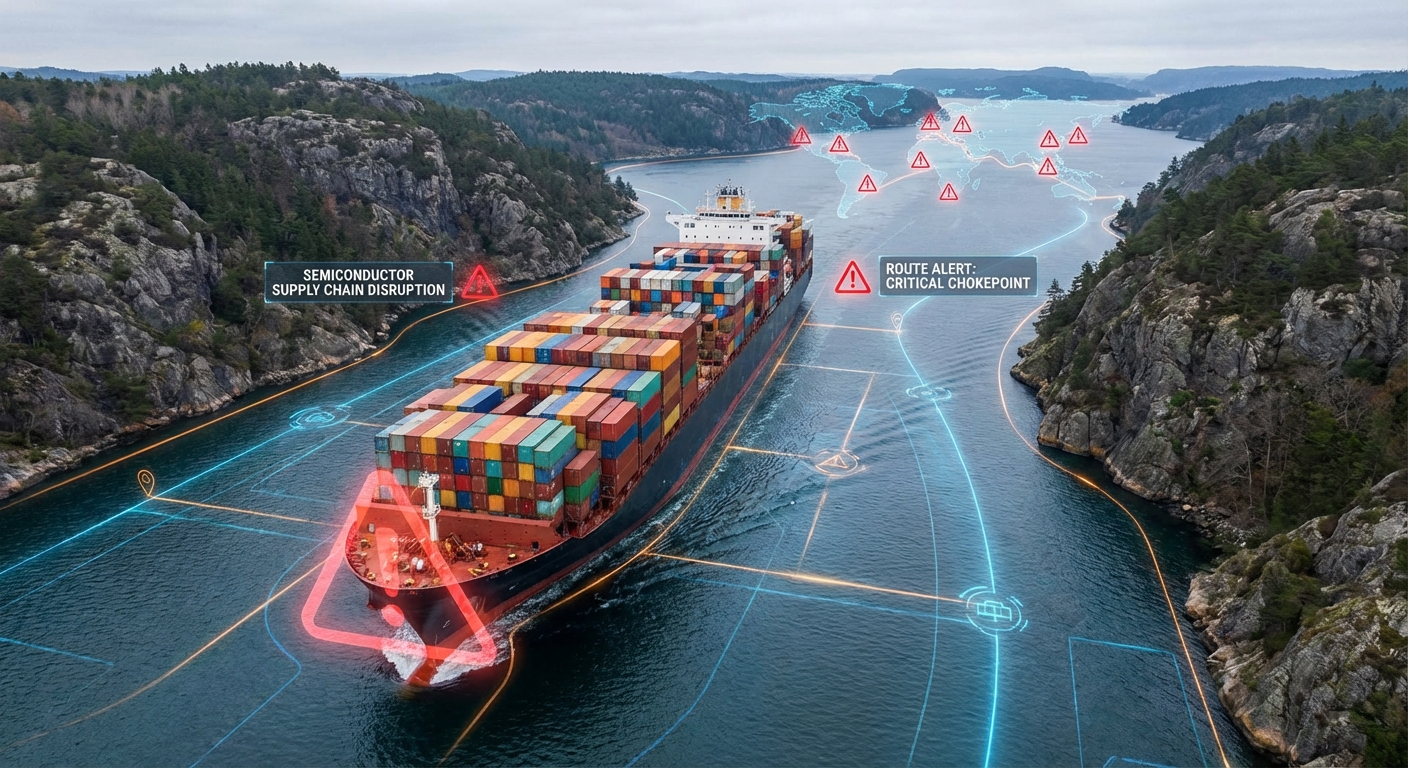
Naval operations near the Strait of Hormuz have forced major shipping carriers to reroute semiconductor raw material shipments around the Cape of Good Hope, adding an average of 18 days to delivery timelines for critical inputs. Neon gas — essential for EUV and DUV lithography processes — has seen spot prices spike 240% as supplies from Middle Eastern refineries face disruption. Palladium, used in chip packaging and multilayer ceramic capacitors, has risen 45% on commodity exchanges. The disruption comes at the worst possible time: TSMC and Samsung are ramping 2nm production, which demands higher volumes of specialty chemicals and ultra-pure materials than any previous node. Logistics firms Maersk and CMA CGM have both issued force majeure notices for Persian Gulf routes, while insurers have raised war-risk premiums for vessels transiting the region by 300%.
Several semiconductor material suppliers, including Shin-Etsu and Air Liquide, are activating contingency stockpiles and exploring airlift options for the most critical components, at costs 8-10x higher than sea freight. Industry insiders report that some chipmakers have only 4-6 weeks of neon gas reserves remaining at current consumption rates, creating an urgent scramble for alternative sources. Ukraine, which supplied roughly 50% of the world's semiconductor-grade neon before the 2022 conflict, has partially restored production capacity, and several U.S. and European suppliers are now fielding emergency procurement requests from TSMC and Samsung. The palladium shortage is particularly acute for advanced packaging processes, where the metal is used in wire bonding and under-bump metallization for flip-chip assemblies. South Africa's Sibanye-Stillwater, the world's largest palladium producer, has reported a threefold increase in spot inquiries from semiconductor customers in the past month alone.
The cascading supply chain disruption extends beyond raw materials to finished semiconductor equipment. ASML has flagged potential 3-4 week delays on delivery of EUV lithography system components sourced from suppliers in the broader Middle East and Indian Ocean shipping corridor. Applied Materials and Lam Research have similarly warned that certain sub-assemblies routed through affected shipping lanes may face delays. The cumulative effect is a supply chain that was already stretched thin by record demand now being tested by a geopolitical shock of a magnitude not seen since the early days of the COVID-19 pandemic. Industry group SEMI estimates that the total logistics cost increase across the semiconductor supply chain could reach $12-18 billion annually if current disruptions persist through the end of 2026.
Sources
Reuters, Financial Times, Maersk, Shin-Etsu Chemical