Meta Launches Muse Spark, Its First Closed Proprietary AI Model, Abandoning Open-Source Llama Strategy
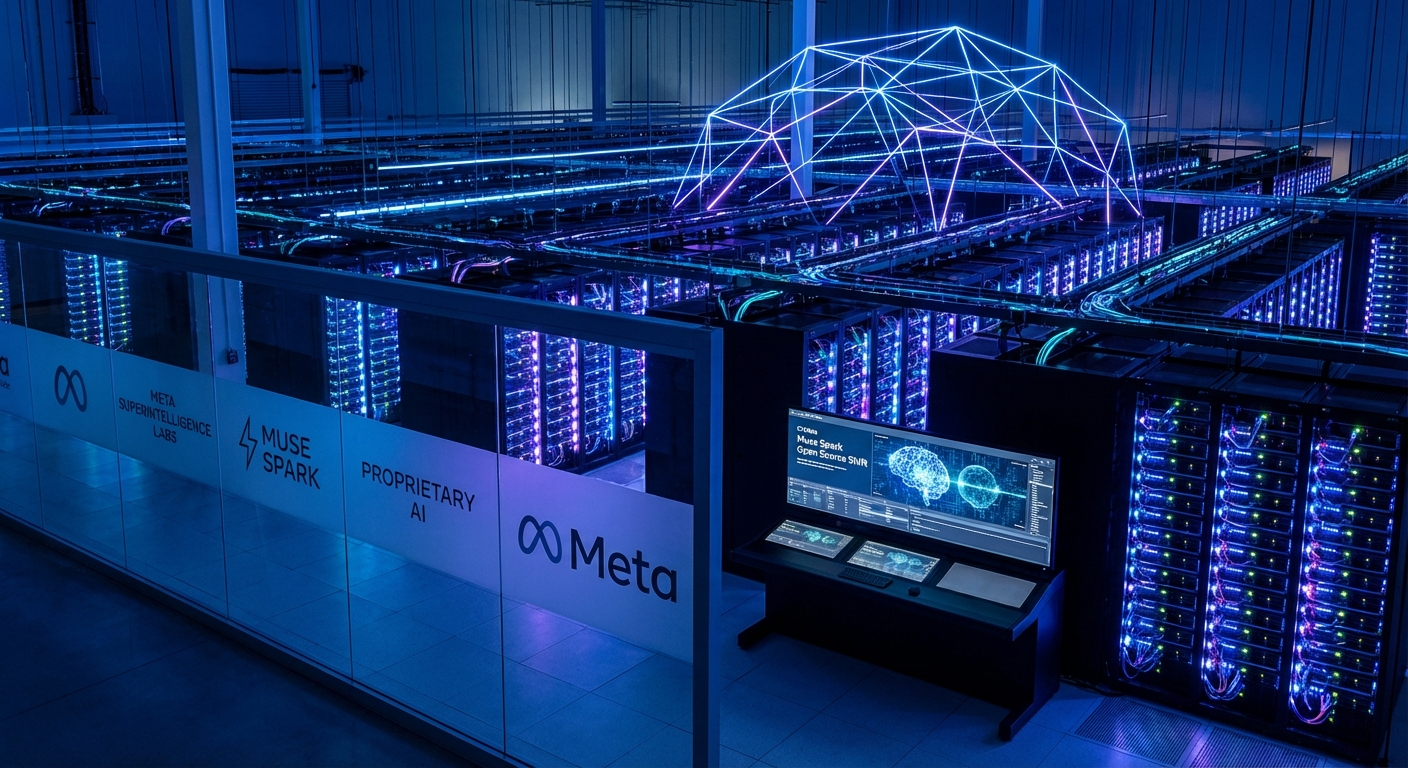
On April 8, 2026, Meta debuted Muse Spark — the first model from its new Meta Superintelligence Labs, headed by chief AI officer Alexandr Wang. The model is closed-source, a deliberate break from Meta's open Llama lineage that has defined the company's AI strategy since 2023. Meta's decision to go proprietary signals a fundamental shift in how the company views AI as a competitive asset rather than a public good to be shared with the research community.
Muse Spark uses a multi-agent parallel reasoning architecture that Meta claims achieves comparable capability to Llama 4 Maverick using an order of magnitude less compute. The launch drove an 87% day-over-day spike in Meta AI app downloads in the U.S. on April 8, pushing the app from No. 57 to No. 5 on the U.S. App Store by April 9 — a dramatic jump that VentureBeat and CNBC attributed primarily to the Muse Spark announcement and associated marketing push.
The strategic implications are significant. For years, Meta's open-source Llama models served as the de facto standard for open AI development, enabling thousands of companies to build products on top of freely available weights. By going closed with Muse Spark, Meta is signaling that it believes the competitive advantage from proprietary models now outweighs the ecosystem benefits of openness. Analysts at Bloomberg and Fortune note that the move brings Meta's strategy closer to that of OpenAI, Anthropic, and Google, intensifying a four-way race for AI consumer market share that will be decided largely on product quality rather than openness.
Sources
TechCrunch, CNBC, Bloomberg, VentureBeat