Global Semiconductor Industry on Track to Hit $1 Trillion in Annual Sales for 2026, SIA Forecasts
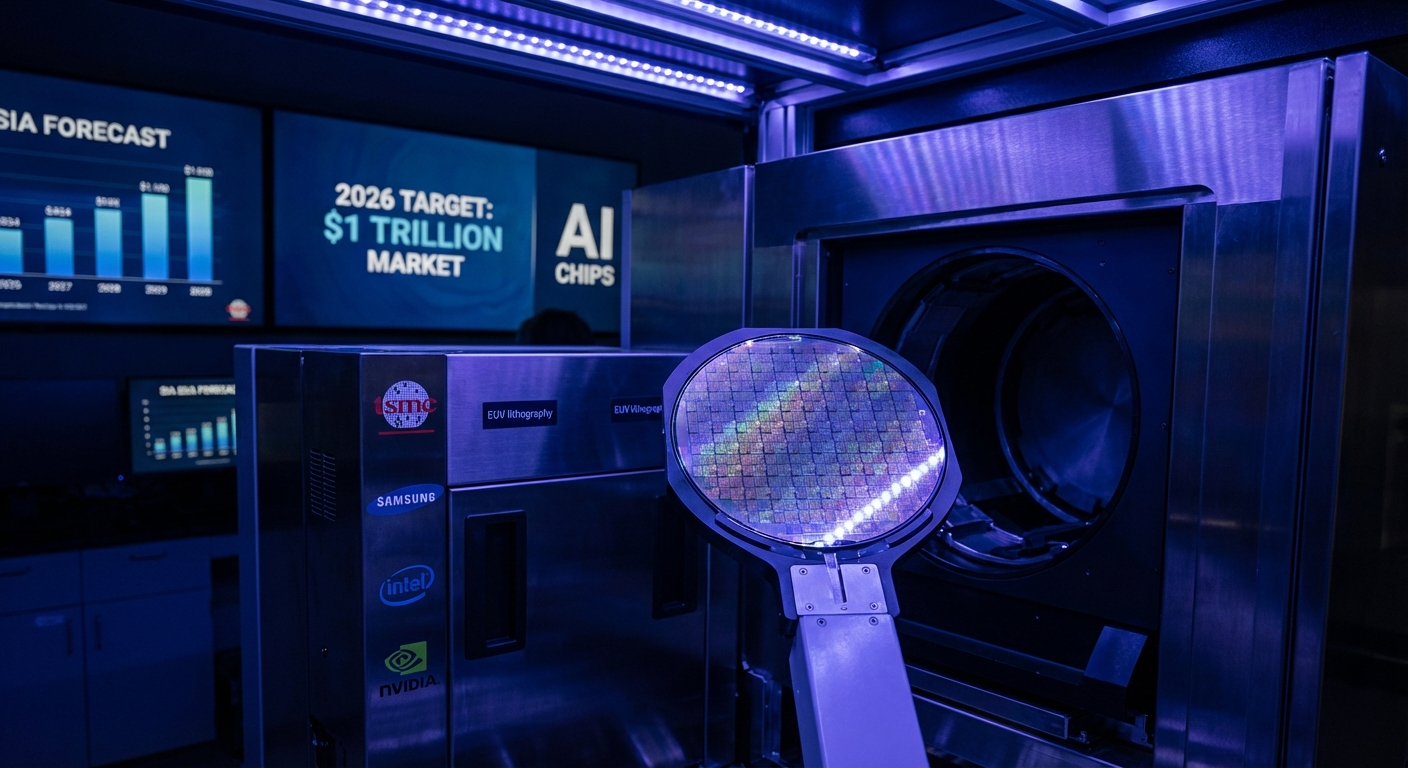
The Semiconductor Industry Association (SIA) has forecast that the global chip industry will cross $1 trillion in annual revenue for the first time in 2026, following a record-breaking 2025 in which the industry generated $791.7 billion — a 25.6% year-over-year increase driven primarily by explosive demand for AI accelerators, high-bandwidth memory, and advanced logic chips. The milestone would mark a near-doubling of semiconductor revenues in five years and reflects the industry's transformation from a cyclical manufacturing sector into a foundational layer of the global AI economy, with AI-related chips now accounting for over 30% of total semiconductor revenue by value.
AI chips account for the fastest-growing segment. NVIDIA's Blackwell-generation GPUs and the upcoming Vera Rubin platform, alongside custom silicon from hyperscalers including Google's TPUs, Amazon's Trainium and Inferentia processors, and Microsoft's Maia AI accelerator, are driving sustained demand for TSMC's leading-edge nodes. Memory is an equally critical driver: SK Hynix, Samsung, and Micron have all seen HBM3e and HBM4 supply sell out well into 2026, with leading-edge DRAM pricing rising sharply from the lows of the 2023–2024 inventory correction cycle. Advanced foundry services from TSMC's N3 and N2 process nodes are booked solid, with new tape-out lead times stretching to 18 months for some customers.
The $1 trillion forecast carries meaningful risk. Geopolitical tensions around Taiwan, US-China export controls on advanced AI chips, and the Trump administration's tariff regime represent the most significant downside scenarios. The US-Taiwan trade deal signed in January 2026 provided some policy clarity by reducing chip tariffs to 15% in exchange for a $500 billion Taiwanese manufacturing investment in the United States, but analysts warn that any escalation in US-China tensions — particularly around Nvidia's ability to ship AI processors to Chinese customers — could disrupt the growth trajectory in the second half of the year. Despite these risks, the SIA noted that demand signals from hyperscalers and over 40 sovereign AI programs underway globally suggest the industry's structural growth trend remains intact through at least 2028.
Sources
Tom's Hardware, SIA