Micron Ships HBM4 for NVIDIA Vera Rubin — 36GB 12-High Stacks Deliver 2.8 TB/s Bandwidth
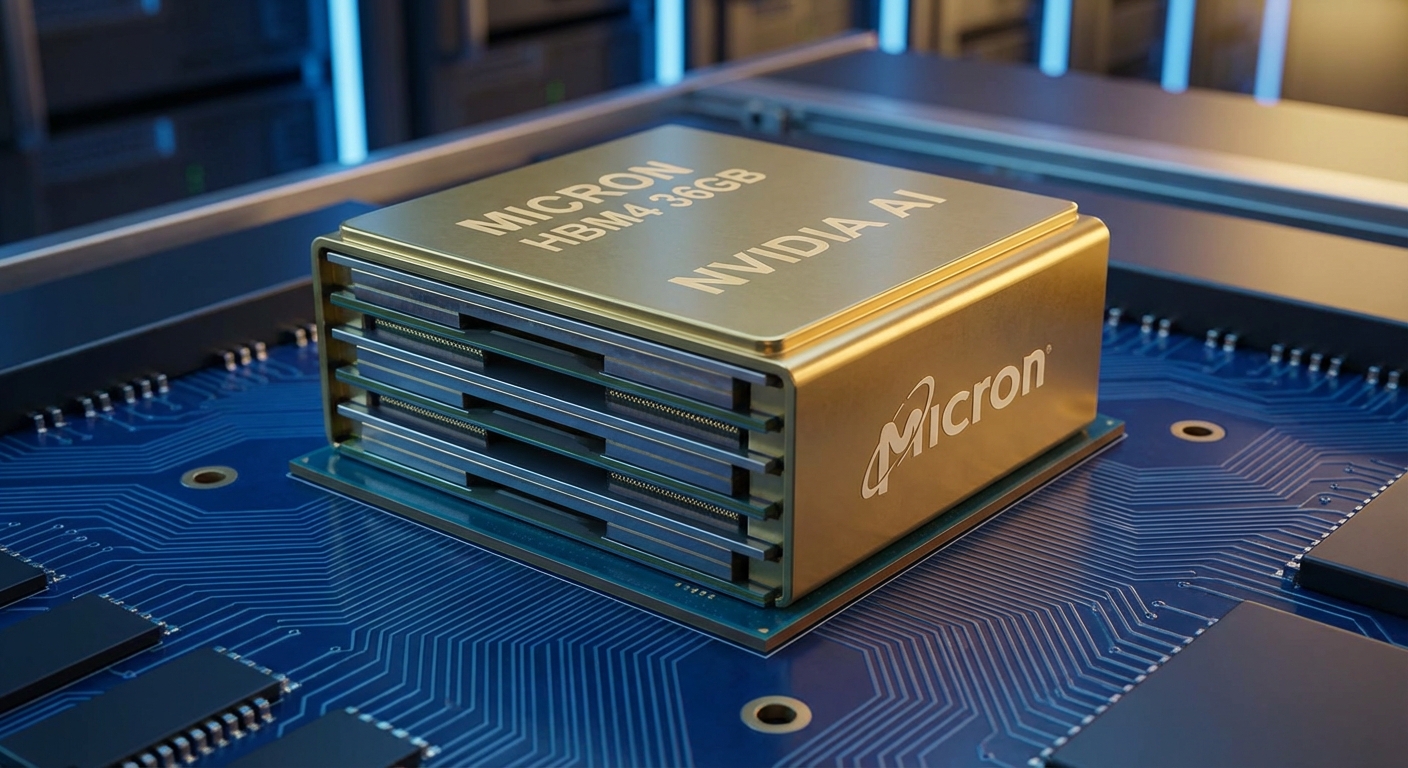
Micron has begun high-volume shipments of HBM4 36GB 12-high memory modules, a core component of NVIDIA's Vera Rubin platform. The HBM4 modules deliver speeds exceeding 11 Gb/s with bandwidth of over 2.8 TB/s — a 2.3x performance increase over HBM3E while consuming 20% less power. The achievement represents a major milestone for Micron, which trailed SK Hynix in HBM3 market share but has closed the gap significantly with its fourth-generation technology. Micron also revealed it has started sampling 48GB 16-high HBM4 stacks for future platforms, pushing the boundaries of through-silicon via (TSV) technology and thermal management in vertically stacked memory.
The AI memory supercycle drove Micron to a massive Q2 2026 earnings beat, with HBM revenue becoming the fastest-growing segment in the company's history. HBM4 revenue alone contributed $2.8 billion in the quarter, a figure that exceeded Micron's entire HBM revenue for all of 2024. CEO Sanjay Mehrotra told analysts that HBM demand visibility now extends through 2028, with every major AI accelerator platform — including NVIDIA Rubin, AMD MI400, and Google TPU v6 — requiring increasing amounts of high-bandwidth memory per chip. Micron's gross margins on HBM4 are estimated at 55-60%, significantly higher than its traditional DRAM business, making HBM the most profitable product category in the company's portfolio.
SK Hynix is evaluating ASML's High-NA EUV technology for future HBM4 production to achieve tighter patterning and higher stacking density. The competition between Micron and SK Hynix for NVIDIA's HBM allocation has intensified, with Samsung also fighting to qualify its own HBM4 modules after struggling with HBM3E yields. Industry analysts project the total HBM market will reach $45 billion by 2027, up from just $4 billion in 2023, representing the most dramatic market expansion in memory industry history. The strategic importance of HBM has elevated memory companies from commodity suppliers to essential partners in the AI ecosystem, fundamentally changing the power dynamics in the semiconductor value chain.
Sources
Micron, NVIDIA Newsroom, TrendForce