NVIDIA Feynman GPU Built on TSMC A16 Node — Intel Foundry May Handle Manufacturing and Packaging
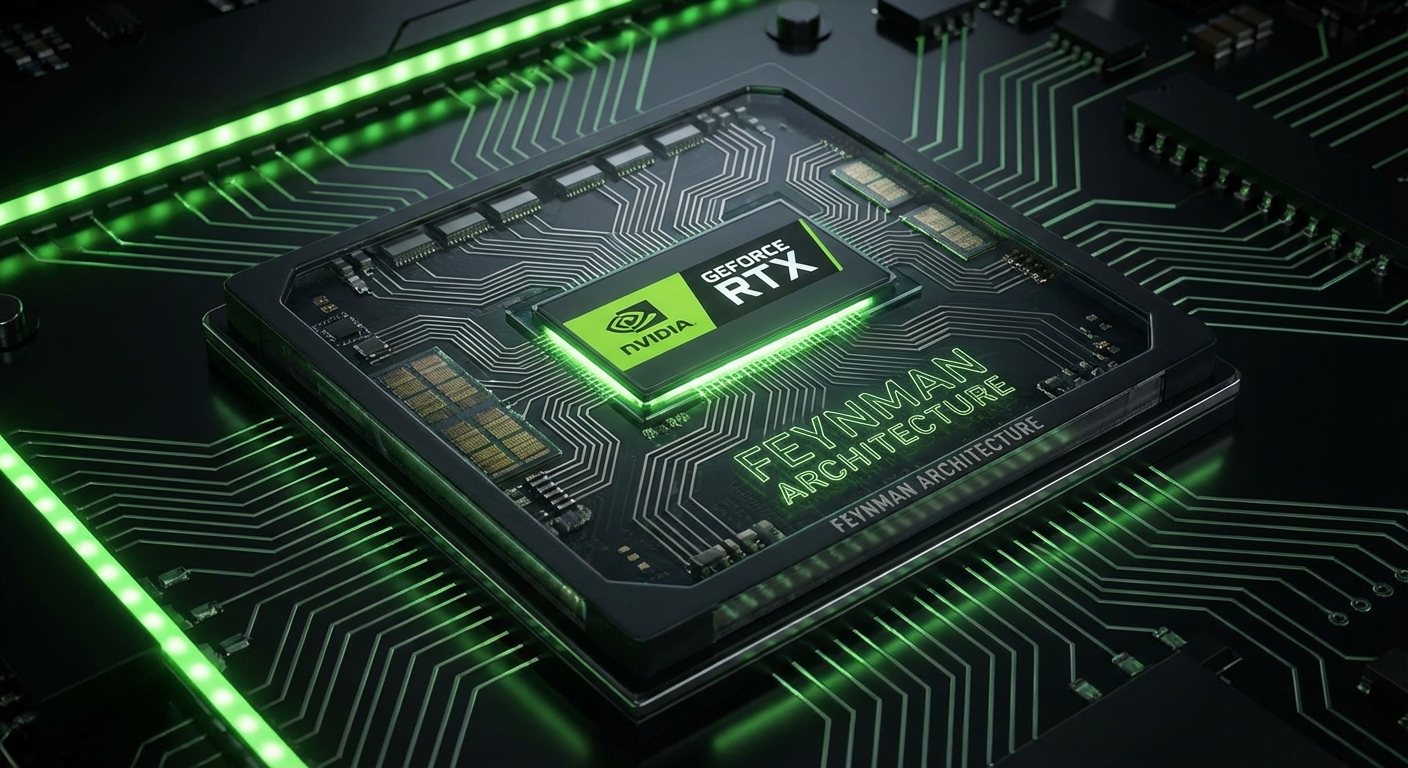
NVIDIA's next-generation Feynman GPU architecture is being designed on TSMC's A16 process node, the foundry's most advanced technology featuring backside power delivery for improved transistor performance and power efficiency. The A16 node represents a generational leap beyond N2, with TSMC claiming 8-10% performance gains and 15-20% power reduction compared to its already-impressive 2nm technology. Feynman is expected to succeed the Rubin architecture and target the data center AI market in 2028, with a transistor count rumored to exceed 400 billion in its flagship configuration — a staggering figure that underscores the relentless pace of GPU scaling driven by AI workload demands.
However, in a significant shift for the NVIDIA chips supply chain, reports indicate the company is also in discussions with Intel Foundry to handle portions of Feynman's chip manufacturing and advanced packaging workloads. The move reflects both the extreme capacity constraints at TSMC and NVIDIA's strategic interest in diversifying its foundry relationships ahead of what is expected to be massive demand for AI-class GPUs in 2027 and beyond. Sources familiar with the discussions say Intel's 14A process node, which incorporates High-NA EUV lithography, is being evaluated for specific chiplets within the Feynman multi-die architecture. Intel's EMIB and Foveros 3D packaging technologies are also under consideration for integrating HBM5 memory stacks with Feynman compute dies.
If confirmed, Intel Foundry would gain its most high-profile external customer to date, potentially validating the Intel 18A and subsequent nodes for the broader semiconductor market. Industry analyst Dylan Patel of SemiAnalysis estimates that even a 15-20% allocation of Feynman production to Intel would represent $3-5 billion in annual foundry revenue — a transformative win for Intel's fledgling external foundry business. The deal would also have significant geopolitical implications, as it would reduce NVIDIA's near-total dependence on Taiwanese manufacturing for its most strategically important products. NVIDIA CEO Jensen Huang has publicly stated that supply chain resilience is a "board-level priority," and the Feynman-Intel discussions appear to be the most concrete manifestation of that strategy to date.
Sources
Reuters, Tom's Hardware, SemiAnalysis