U.S. Renews Equipment Import Permits for TSMC, Samsung, and SK Hynix China Fabs
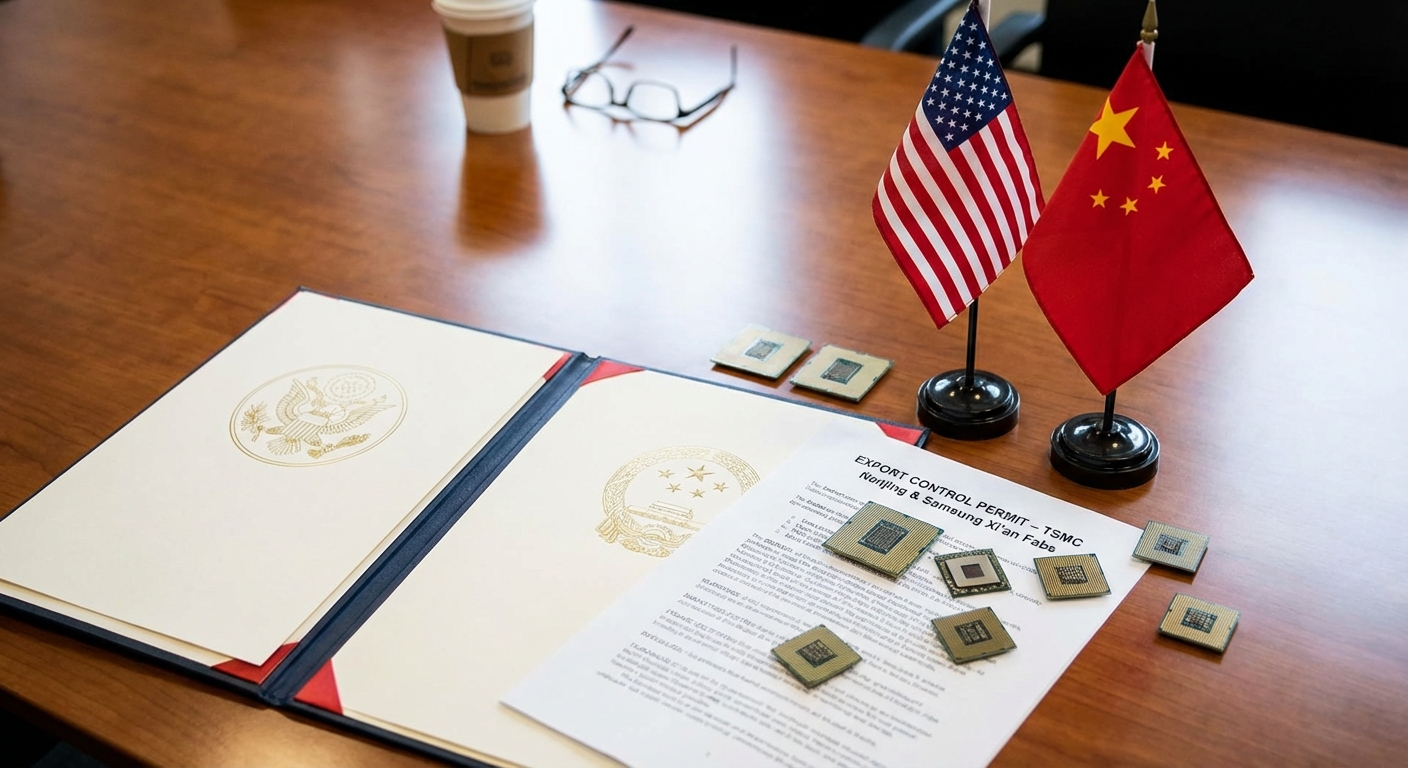
The U.S. Commerce Department has renewed equipment import permits that allow TSMC, Samsung, and SK Hynix to continue operating and upgrading their existing fabrication facilities in China, providing a degree of regulatory certainty for the three chipmakers. The permits, which are valid for two years with annual review provisions, cover the import of American-made semiconductor manufacturing equipment to Chinese fabs that produce legacy and mature-node chips, primarily for the domestic Chinese market. TSMC's Nanjing fab (producing 16nm and 28nm chips), Samsung's Xi'an NAND flash facility, and SK Hynix's Dalian and Wuxi DRAM operations are all covered by the renewed permits.
The renewal reflects a pragmatic approach by Washington, which recognizes that abruptly shutting down these facilities would disrupt global supply chains for automotive, industrial, and consumer electronics chips. An estimated 15% of the world's mature-node semiconductor capacity is located in Chinese facilities operated by foreign companies, and sudden closure would create shortages in everything from washing machine controllers to automotive airbag sensors. The three companies collectively employ over 25,000 workers in their Chinese operations and generate approximately $8 billion in annual revenue from these facilities — significant figures that make a cold-turkey approach economically and diplomatically untenable.
However, the permits explicitly exclude any equipment related to advanced process nodes below 14nm or EUV lithography systems, maintaining the core technology restrictions aimed at limiting China's access to cutting-edge chip manufacturing capabilities. The Bureau of Industry and Security (BIS) has also added new conditions requiring quarterly reporting on equipment utilization and production output, and has reserved the right to revoke permits with 90 days' notice if evidence of technology diversion is discovered. China's domestic chipmakers, including SMIC and Hua Hong, continue to expand mature-node capacity using domestically sourced equipment, a trend that has accelerated since the initial export controls were imposed in 2022. Industry analysts estimate that China's share of global mature-node capacity will reach 30% by 2028, up from 18% currently, creating potential overcapacity risks in legacy chip markets that could pressure pricing for all competitors.
Sources
Reuters, Wall Street Journal, SEMI