ASML High-NA EUV Machines Roll Out — Intel Deploys First, Samsung and SK Hynix Follow
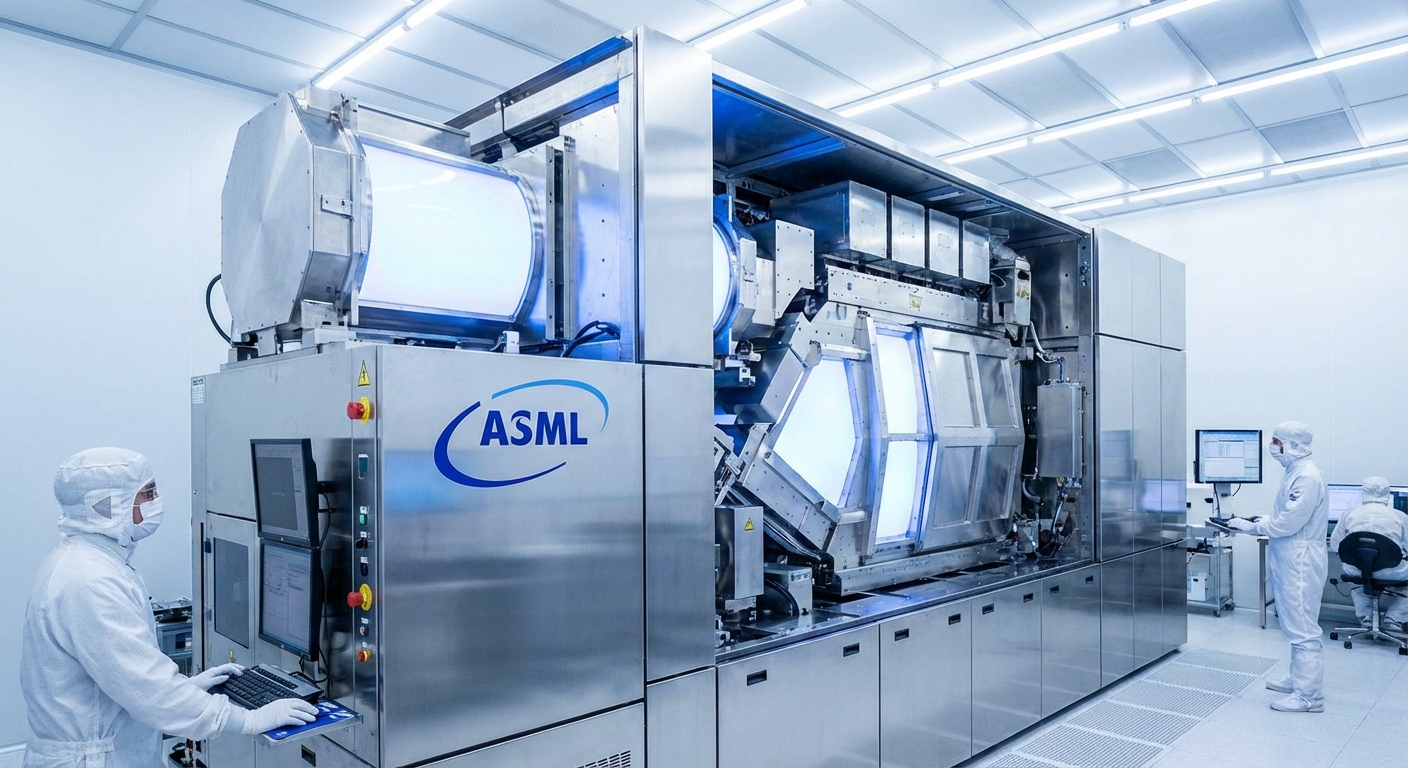
ASML's High-NA EUV lithography system, the EXE:5200B, is now in active deployment across the semiconductor industry. Intel has taken the lead, using the machine to pattern its upcoming 14A process node, positioning the company at the forefront of EUV lithography adoption. The High-NA system features a 0.55 numerical aperture (up from 0.33 on standard EUV), enabling finer patterning resolution of 8nm half-pitch — a capability essential for manufacturing transistors at the 2nm node and below. Samsung is receiving its first High-NA EUV system in early 2026, with plans to integrate it into advanced foundry production lines at its Pyeongtaek campus.
Meanwhile, SK Hynix is evaluating the technology for future HBM4 memory production, where tighter patterning could enable higher stacking density and faster interconnects. Each EXE:5200B system costs upward of $380 million, weighs over 150 metric tons, and requires a dedicated building wing for installation — making ASML the most critical equipment supplier in the entire chip manufacturing ecosystem. ASML's order backlog now exceeds $40 billion, with delivery slots booked through 2028, giving the Dutch company unprecedented visibility into the semiconductor industry's capital expenditure trajectory. TSMC has ordered at least 20 High-NA systems for its upcoming A14 and A16 process nodes, representing over $7.6 billion in equipment spending from a single customer.
The High-NA EUV rollout has significant implications for the competitive landscape. Intel's early adoption gives it a potential process technology advantage in patterning capability, even if its overall manufacturing ecosystem lags TSMC's. ASML CEO Christophe Fouquet has stated that the company is already developing the next-generation Hyper-NA system with a 0.75 numerical aperture, targeted for deployment around 2030. The concentration of cutting-edge lithography capability in a single company — ASML holds a 100% monopoly on EUV systems — represents both a strategic vulnerability and a powerful chokepoint in global semiconductor supply chains. Geopolitical pressure on the Netherlands to restrict ASML sales to China has intensified, with the Dutch government now requiring export licenses for both High-NA and standard EUV systems destined for Chinese customers.
Sources
ASML, Intel, Samsung Newsroom, DigiTimes