TSMC Capacity Crunch Forces NVIDIA and Broadcom to Look Elsewhere — Intel and Samsung May Benefit
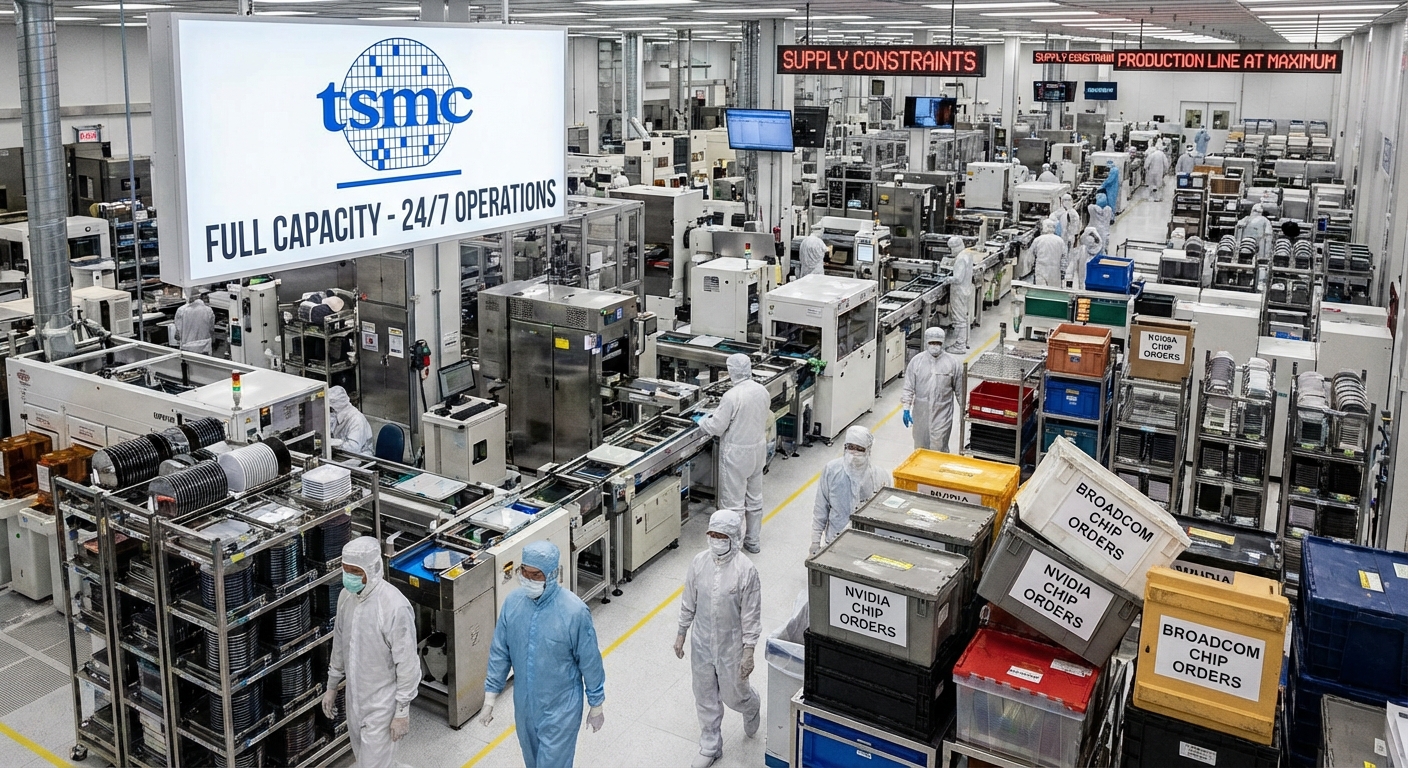
The overwhelming demand for TSMC's advanced nodes and CoWoS advanced packaging has created a capacity crunch that is forcing even the foundry's largest customers to explore alternatives. NVIDIA and Broadcom, two of the biggest consumers of TSMC silicon, are both actively evaluating Intel Foundry and Samsung Foundry for portions of their future chip manufacturing needs. TSMC's advanced node utilization rates are running at over 100% when accounting for wafer starts versus nameplate capacity, and the company has told customers that meaningful additional 3nm and 2nm capacity will not be available until mid-2027 at the earliest.
The situation echoes the chip shortage of 2021-2022 but is concentrated at the leading edge rather than across the entire semiconductor supply chain. TSMC's allocation committee — an internal body that determines which customers receive wafer starts — has become one of the most powerful decision-making groups in the technology industry, with the ability to accelerate or delay billions of dollars in product launches from the world's largest chipmakers. Companies that historically had guaranteed allocations are now finding themselves rationed, creating frustration and urgency to secure alternative manufacturing sources.
For Intel and Samsung, the TSMC bottleneck represents a strategic opportunity to win business that might otherwise never have been available. Intel Foundry chief Kevin O'Buckley has reportedly held over 40 meetings with TSMC customers in the past quarter alone, offering aggressive pricing, guaranteed capacity commitments, and the geopolitical advantage of U.S.-based manufacturing. Samsung is making a similar pitch, emphasizing its integrated memory-logic capabilities and competitive 2nm GAA technology. Industry analysts note that even capturing 5-10% of overflow demand from TSMC's top customers would represent billions in revenue for either competitor and could reshape the competitive dynamics of the foundry market for years to come. The fundamental question is whether customers currently forced to explore alternatives will return to TSMC once capacity expands, or whether this moment represents a genuine and lasting shift toward a more balanced foundry ecosystem.
Sources
Bloomberg, SemiAnalysis, DigiTimes