DLSS 5 Multi-Frame Generation Promises 3-6x Performance at 4K for RTX 50-Series
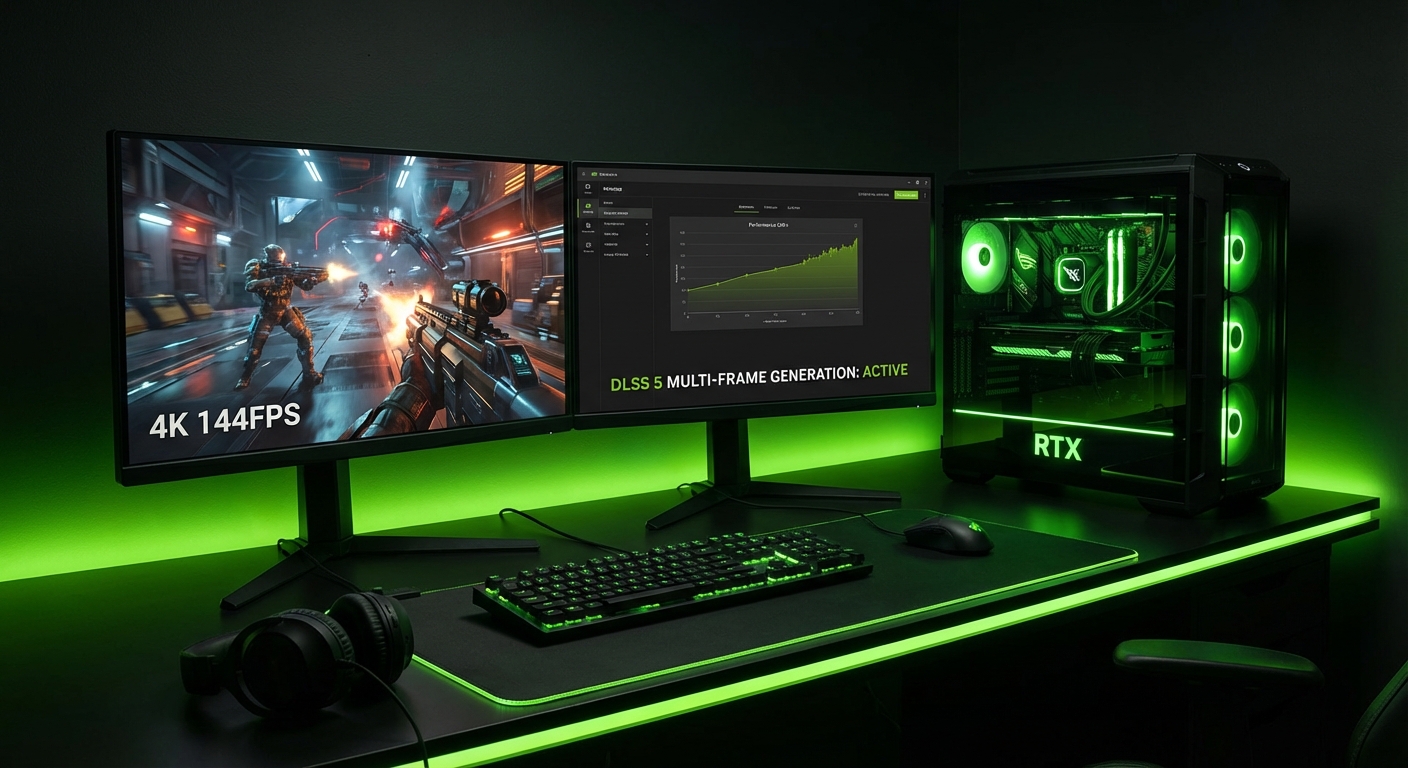
Alongside the neural rendering announcement, NVIDIA detailed the multi-frame generation pipeline baked into DLSS 5. Building on the frame generation introduced in DLSS 3, the new system can produce between three and six AI-generated frames for every traditionally rendered frame, dramatically boosting perceived frame rates at 4K resolution. The technology is exclusive to the RTX 50-series architecture, leveraging its updated Tensor Cores and optical flow accelerators. Early benchmarks in supported titles show the RTX 5090 sustaining well over 200 fps at 4K with ray tracing enabled, a figure that was unthinkable just two GPU generations ago for PC gaming enthusiasts.
The key improvement over DLSS 3's frame generation lies in latency reduction. NVIDIA's Reflex 2.0 technology, deeply integrated with the multi-frame pipeline, keeps input-to-display latency under 10 milliseconds even when generating six interpolated frames — a critical threshold for competitive gaming. In benchmark testing by Hardware Unboxed, the RTX 5090 running Cyberpunk 2077 at 4K with full path tracing delivered an average of 247 fps with multi-frame generation enabled, compared to 42 fps with the feature disabled. The visual quality of generated frames has also improved substantially: Digital Foundry's per-pixel analysis found that DLSS 5 multi-frame artifacts are 83% less frequent than those produced by DLSS 3, with virtually no visible ghosting in fast-motion scenes.
NVIDIA has partnered with monitor manufacturers ASUS, LG, and Samsung to certify new 4K 360Hz displays as "DLSS 5 Ready," ensuring optimal compatibility with multi-frame generation output. The RTX 5080 supports up to 4x frame generation, while the full 6x capability remains exclusive to the RTX 5090. Game developers can fine-tune the feature per-title, with some studios opting for conservative 3x generation to prioritize visual consistency over raw frame rate. The multi-frame generation SDK is available now, and NVIDIA expects over 50 games to support the feature by year-end 2026.
Sources
NVIDIA, Wccftech