AI Data Center Costs Spike 20% as Iran Conflict Drives Energy and Hardware Inflation — Hyperscalers Reassess CapEx
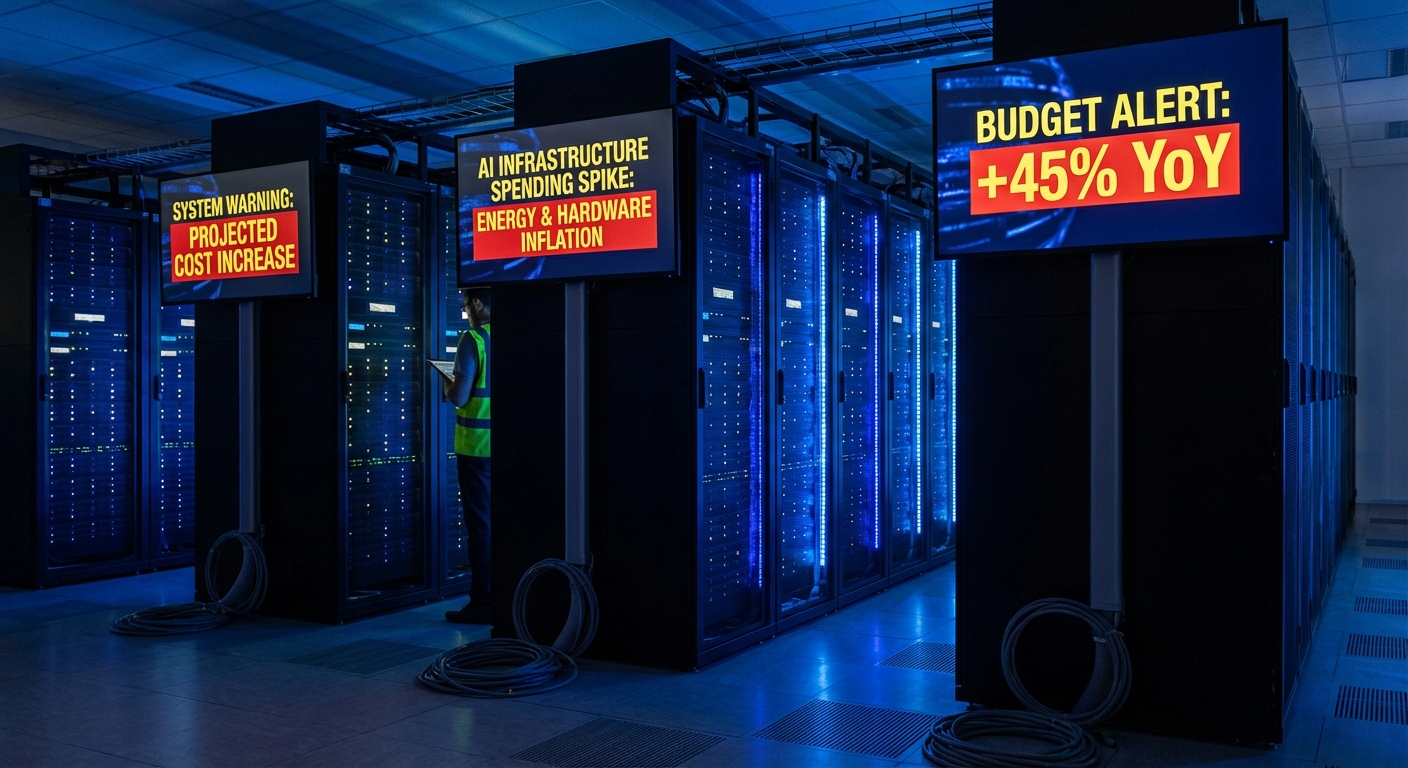
The Iran conflict is hitting the AI industry through two vectors simultaneously: surging energy costs for power-hungry data centers and delayed deliveries of GPU servers and networking equipment. Microsoft, Google, Amazon, and Meta — which collectively planned $280 billion in AI infrastructure spending for 2026 — are now reassessing their capital expenditure timelines. Data center electricity costs have risen 20-25% in regions dependent on fossil fuel generation, with some hyperscalers reportedly activating diesel backup generators to maintain operations during grid instability events in Asia. The GPU shortage, already severe before the conflict, has worsened as shipping delays push back NVIDIA Blackwell and upcoming Rubin deliveries by 4-6 weeks.
OpenAI CEO Sam Altman told investors that training costs for GPT-5.5 could increase by $200-400 million if the energy situation persists. Anthropic and Google DeepMind have both delayed planned training runs for next-generation models. Microsoft Azure has reportedly paused expansion of two planned data center campuses in Southeast Asia due to uncertain power costs, while Amazon Web Services is accelerating construction of nuclear-powered data center facilities in the eastern United States as a hedge against fossil fuel volatility. Meta's infrastructure team has begun exploring on-site small modular reactor (SMR) deployments for its largest AI training clusters, a strategy that would take years to implement but reflects the severity of the energy cost concern.
The downstream effects on AI development timelines are already visible. Several major AI labs have shifted compute allocation from training new models to optimizing inference efficiency on existing ones, a pragmatic response to the higher per-hour cost of GPU cluster operation. Analysts at Morgan Stanley estimate that the total incremental cost to the AI industry from the Iran conflict could reach $35-50 billion in 2026, encompassing higher energy bills, delayed hardware deliveries, and increased component costs. The conflict underscores the fragility of the AI boom's dependence on a complex, globally distributed hardware supply chain that runs from oil wells in the Persian Gulf to chip fabs in Taiwan to data centers in Virginia. It also strengthens the argument for energy-independent AI infrastructure, a trend that was already emerging but has now become a boardroom priority at every major technology company.
Sources
The Information, Bloomberg, CNBC, Morgan Stanley