SOX Index Posts Worst Week Since 2022 — $340 Billion Wiped From Semiconductor Stocks as Iran Fears Grow
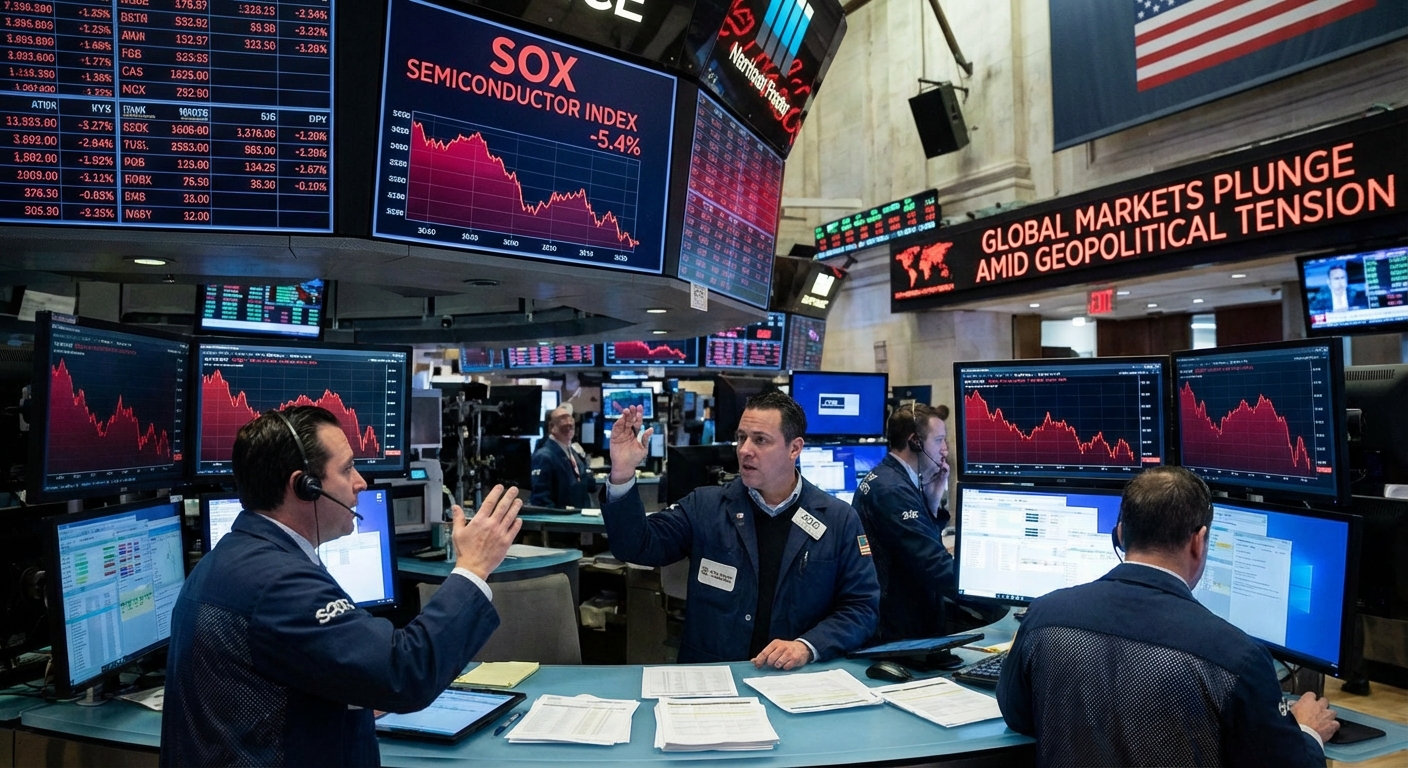
The Philadelphia Semiconductor Index (SOX) recorded its worst weekly performance since October 2022, shedding 11.4% as investors priced in the cascading effects of the Iran conflict on the global chip industry. NVIDIA led the decline, falling 14% on concerns that shipping disruptions could delay Vera Rubin platform deliveries. ASML dropped 12% despite its record backlog, as analysts flagged potential delays in High-NA EUV system installations due to component supply issues. AMD fell 10%, Qualcomm shed 9%, and Broadcom declined 8%. The only bright spots were defense-exposed chipmakers: Microchip Technology and Texas Instruments, both major suppliers of military-grade components, rallied 6% and 4% respectively.
Hedge funds have increased short positions on the semiconductor sector by $18 billion in the past two weeks, the largest bearish bet since the 2022 downturn. Options market data shows implied volatility on the SOX index surging to 45%, levels not seen outside of the COVID crash and the 2022 rate-hike cycle. The VanEck Semiconductor ETF (SMH) experienced its largest single-day outflow on record at $2.3 billion, as retail and institutional investors alike rushed to reduce exposure. Put-to-call ratios on NVIDIA and AMD options reached 2.1x and 1.8x respectively, indicating deeply bearish sentiment across the sector.
However, contrarian analysts argue the selloff is overdone — JPMorgan maintained an "overweight" rating on the semiconductor sector, noting that the structural demand drivers from AI remain intact and that any supply disruption would ultimately lead to higher pricing power for chipmakers. Goldman Sachs issued a note titled "Buy the Fear" arguing that geopolitical selloffs in semiconductors have historically reversed within 60-90 days, with the sector outperforming its pre-shock levels by an average of 18% within six months. Berkshire Hathaway's latest 13F filing revealed that Warren Buffett's firm added to its TSMC position during the dip, a move interpreted as a strong contrarian signal by market watchers. The fundamental tension remains between short-term supply chain disruption risk and the long-term reality that global semiconductor demand is on a structural growth trajectory driven by AI, electrification, and digital transformation.
Sources
Bloomberg, JPMorgan, Barclays, MarketWatch