Oil at $125/Barrel Sends Chip Fab Energy Costs Surging 35% — TSMC, Samsung, and Intel Face Margin Squeeze
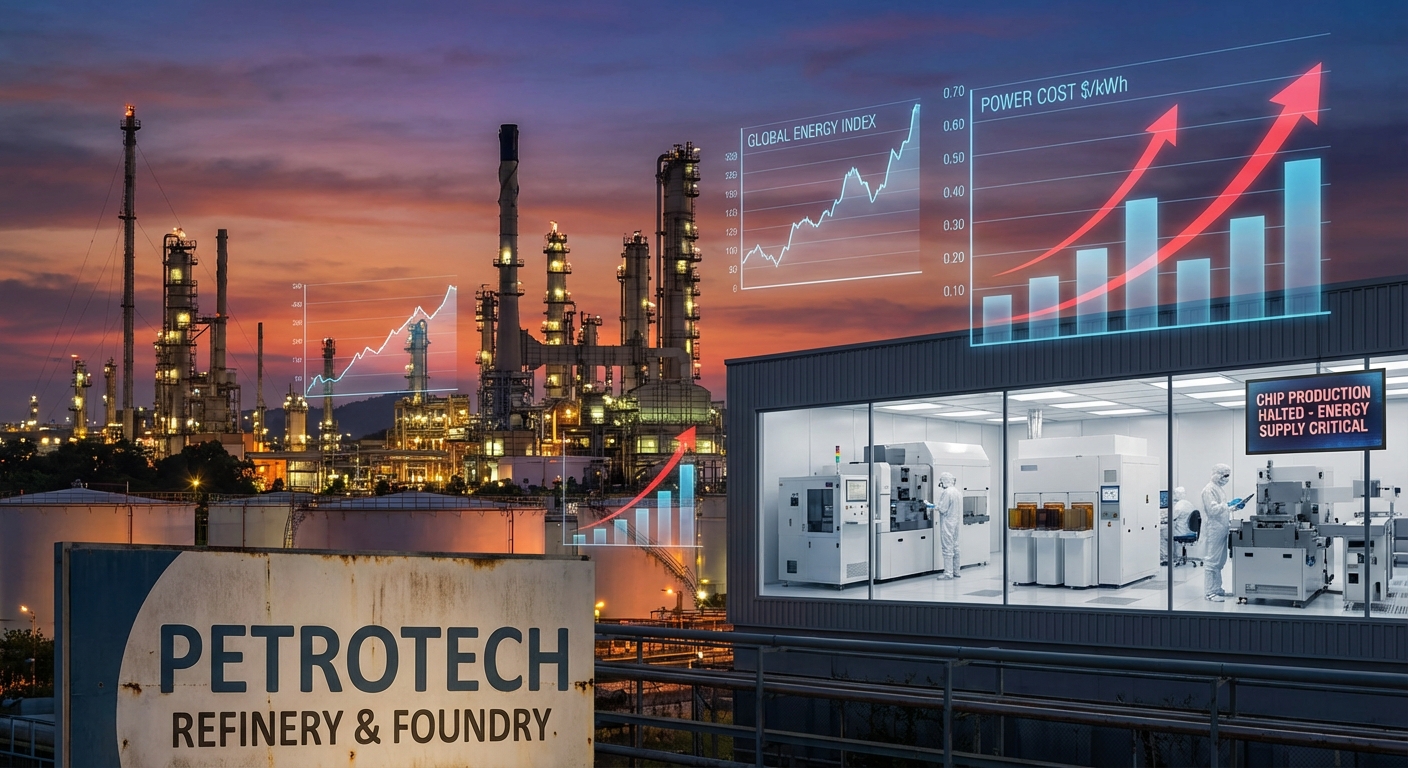
The Iran conflict's most immediate impact on the semiconductor industry is through energy prices. Crude oil surpassing $125 per barrel has triggered a 35% increase in electricity costs across major chip fabrication regions, with South Korea and Taiwan — home to Samsung and TSMC — hit particularly hard due to their heavy reliance on imported energy. A single advanced semiconductor fab consumes roughly 100 megawatts of power continuously, equivalent to a small city, making energy one of the largest variable costs in chip manufacturing. TSMC has warned investors that sustained energy inflation could reduce gross margins by 2-3 percentage points in H2 2026.
Samsung Foundry, already operating on thinner margins than TSMC, faces an even steeper challenge — analysts estimate Samsung's foundry division could swing to an operating loss if energy prices remain elevated through Q4 2026. Intel's U.S.-based fabs benefit from relatively lower energy costs but are not immune, as natural gas prices have risen 28% domestically. The energy shock is accelerating investment in on-site renewable power generation, with TSMC announcing a $2.1 billion solar and battery storage project adjacent to its Kaohsiung facilities.
Industry group SEMI estimates that every $10 increase in oil price adds approximately $800 to the production cost of a single advanced-node wafer. At current oil prices, this translates to roughly $4,000-$5,000 in additional costs per wafer compared to pre-conflict levels, a burden that chipmakers will inevitably pass on to customers through higher pricing. The downstream effects are already visible: major fabless companies including Qualcomm, MediaTek, and Marvell have all flagged potential price increases of 8-15% on next-generation chip orders. Power purchase agreements, once considered routine procurement items, have become boardroom-level strategic discussions at every major semiconductor company.
Sources
Bloomberg Energy, SEMI, TrendForce, TSMC Investor Relations