NVIDIA Will Release No New Gaming GPU in 2026 — First Time in 30 Years as AI Demand Crowds Out Consumer Market
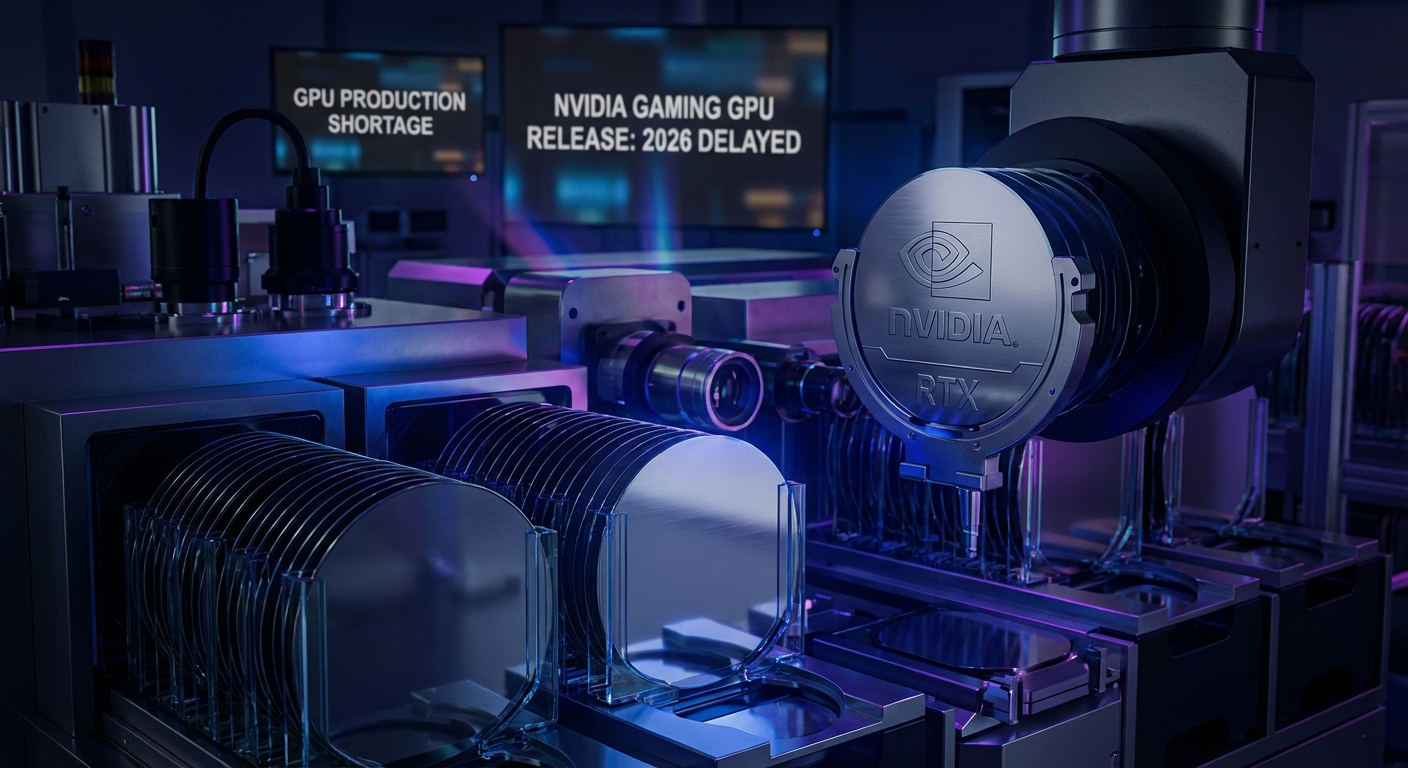
NVIDIA will not release any new consumer gaming GPU in calendar year 2026 — the first time in roughly 30 years the company has gone without a new gaming chip launch, according to reporting first published by The Information and confirmed by TrendForce on February 6, 2026. The driver is an acute global memory shortage: NVIDIA is allocating all available GDDR and HBM capacity to AI accelerators, specifically the H200, B200, and forthcoming Rubin-class chips. Production of the current RTX 50 series has also been cut by approximately 20%, and a planned mid-cycle refresh has been delayed indefinitely.
The RTX 60 series (next-generation gaming GPUs), previously targeted for late 2027 mass production, has now been pushed to 2028 by multiple supply-chain sources. A secondary factor is US export controls: Chinese universities and AI labs, cut off from top-tier AI accelerators, have been repurposing gaming GPUs for AI training, further draining consumer GPU supply. NVIDIA's free cash flow hit $96.5 billion in fiscal year 2026, with AI GPU demand accounting for virtually all profit growth.
The decision marks a structural inflection point for the GPU industry. For three decades, gaming was NVIDIA's core business and the commercial engine that funded the CUDA ecosystem and AI research investments. The company is now explicitly deprioritizing gaming for an entire product cycle to serve hyperscaler AI infrastructure demand. Industry analysts at Tom's Hardware and TrendForce note this may permanently reshape consumer GPU pricing and competitive dynamics, giving AMD a rare multi-year window to capture gaming market share without a competitive NVIDIA response.
Sources
TrendForce, Tom's Hardware