US Plans Chip Tariff Carve-Outs for Amazon, Google, and Microsoft Tied to TSMC's US Expansion
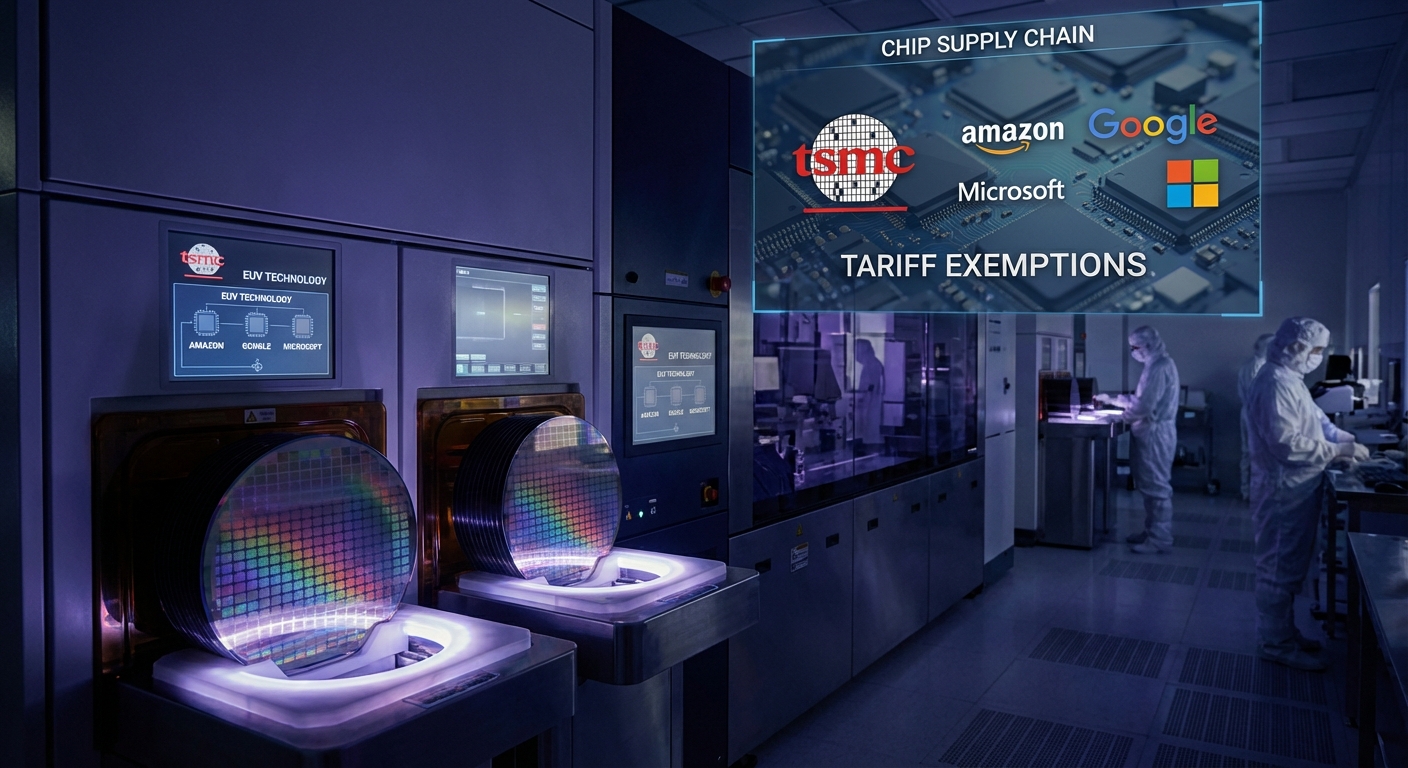
The Commerce Department is preparing tariff exemptions for major US cloud hyperscalers — Amazon, Google, and Microsoft — on certain advanced semiconductors, contingent on investment commitments tied to TSMC's ongoing $165 billion US expansion. The exemptions relate to the 25% tariff on advanced semiconductors introduced via executive action in January 2026 under the Trump administration's broader trade policy framework. A key Commerce Department and USTR policy update is expected around April 14, 2026, marking the 90-day review deadline set by the original proclamation.
Samsung and SK Hynix, whose HBM (High Bandwidth Memory) chips are embedded in NVIDIA and AMD AI accelerators, remain in a difficult position. As memory suppliers, they typically absorb tariff pain-sharing demands from hyperscaler customers rather than passing costs upstream, creating margin pressure at a time when both companies are simultaneously executing capital-intensive HBM4 production ramps. Tom's Hardware reported that the specifics of any exemption arrangement remain murky, with details still under negotiation as of early April.
The tariff exemption framework reflects the administration's effort to balance trade leverage against the risk of disrupting US AI infrastructure buildout. Hyperscalers including Amazon Web Services, Google Cloud, and Microsoft Azure collectively operate the largest AI training and inference fleets in the world, all of which depend on TSMC-fabricated chips — including NVIDIA's H100 and B200 accelerators. DigiTimes noted that the carve-out structure is designed to incentivize continued investment in US-based chip manufacturing while shielding domestic AI operators from the full cost impact of tariffs on their supply chains.
Sources
TrendForce, Tom's Hardware, DigiTimes