NVIDIA Slashes RTX 50 Series GPU Output by Up to 40% as GDDR7 Shortage Hits Gaming Market
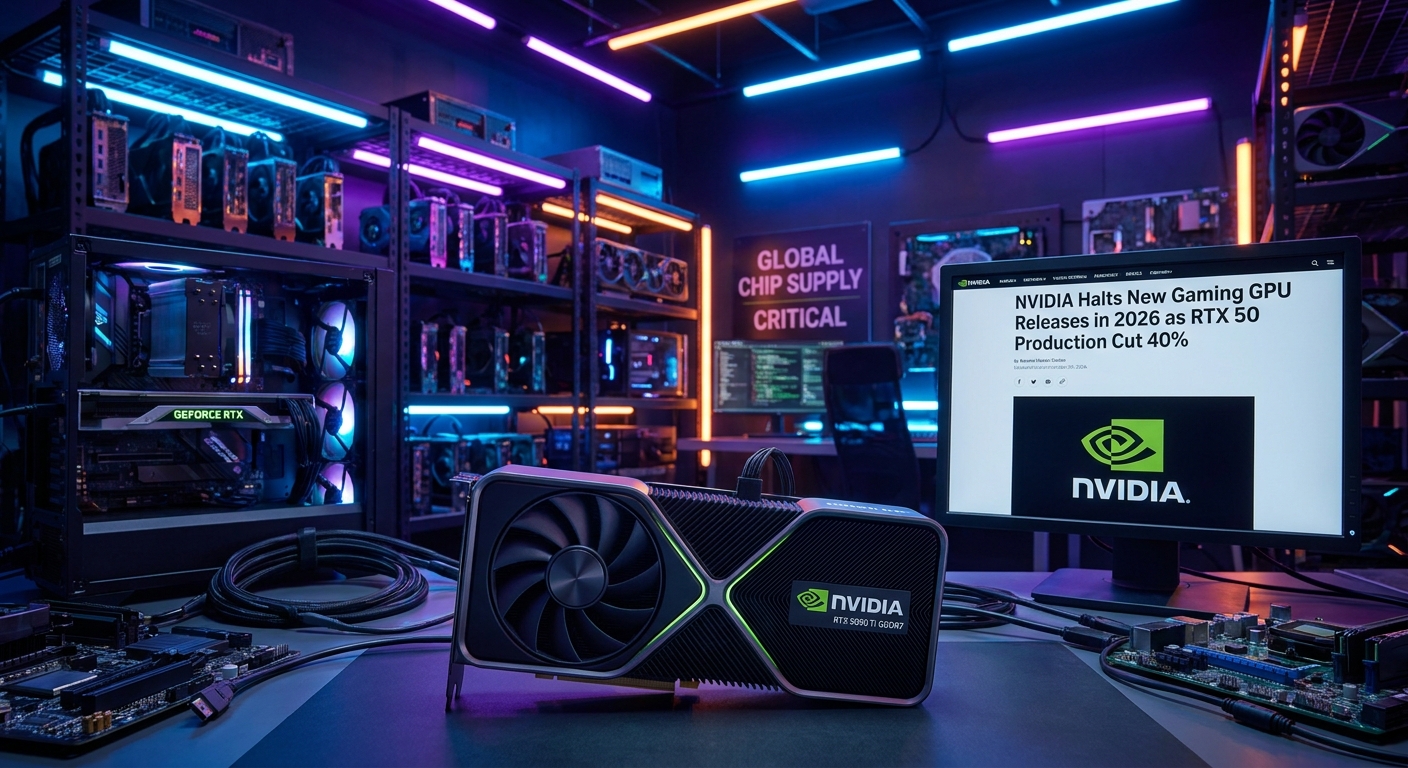
NVIDIA is cutting production of its RTX 50 series gaming GPUs by 20–40% in 2026 due to a severe shortage of GDDR7 memory, according to reports from Tom's Hardware and PC Gamer. The cuts affect AIB (add-in board) partner allocations across the RTX 5060, RTX 5070, and RTX 5080 lines — the very cards that were supposed to bring the Blackwell consumer GPU architecture to mainstream price points. Compounding the shortage, NVIDIA has reportedly ended its Open Pricing Program (OPP), the initiative designed to keep retail prices near MSRP by regulating partner margins. Analysts say the OPP cancellation signals NVIDIA is no longer able to guarantee stable pricing at the GPU volumes it had originally projected, which could push street prices above MSRP for the remainder of 2026.
The GDDR7 memory supply crunch stems from AI infrastructure demand competing directly with consumer gaming for the same high-end memory. NVIDIA's Blackwell AI accelerators — sold to hyperscalers and cloud providers — also consume GDDR7 at scale, and that supply chain is higher priority for NVIDIA than gaming GPU production. As a result, 2026 is set to become the first year in roughly 30 years that NVIDIA has not launched a new gaming GPU generation. The next-generation RTX 60 series, based on the Rubin architecture, is now pushed to 2028. Jensen Huang has floated reviving older GPU architectures enhanced with AI features as a bridge — reports suggest a refreshed RTX 30 series card targeting the budget segment could land as early as June 2026.
The production cuts create an opening for AMD and Intel to compete more aggressively in the gaming GPU market. AMD's RDNA 4 architecture has positioned the RX 9070 and RX 9070 XT as strong performance-per-dollar options in the mid-range, while Intel's Arc B-series Battlemage cards have carved out a presence in the budget tier where GDDR6 memory constraints are less severe. TechRadar noted that supply tightness will be most acute for the RTX 5080 and RTX 5090 throughout the summer. For PC gamers, the combination of reduced supply, no OPP floor, and no new GPU generation arriving creates a difficult 12-month outlook — particularly for buyers hoping to upgrade at the mid-range to high-end spectrum.
Sources
Tom's Hardware, PC Gamer, TechRadar