NVIDIA Cuts Rubin GPU 2026 Output Target by 25% as HBM4 Suppliers Forced Into Costly Redesigns
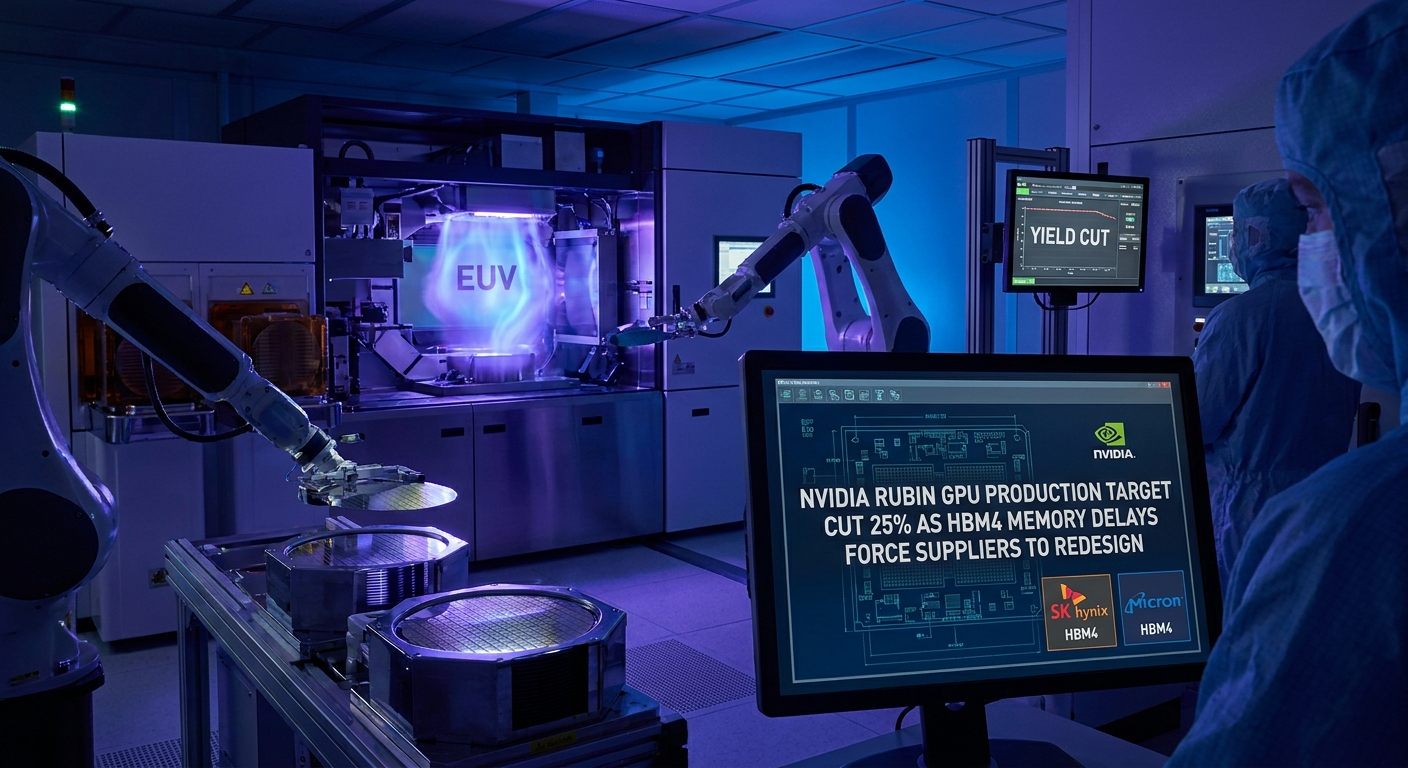
NVIDIA has lowered its 2026 production target for its next-generation Rubin GPU platform from 2 million units to 1.5 million units — a 25% reduction — after HBM4 memory suppliers SK Hynix and Micron were forced to redesign their products to meet revised memory specifications, pushing mass manufacturing back by at least one quarter. The redesigns were triggered by NVIDIA raising the performance bar for HBM4 mid-cycle, requiring all three major HBM suppliers to go back to the drawing board on stacking architecture and die configurations.
SK Hynix, which had been positioned as NVIDIA's primary HBM4 supplier for Rubin, is reportedly considering reducing its planned 2026 HBM4 shipments to NVIDIA by 20–30% amid persistent delays in validating the new memory stack against Rubin's specifications. Micron faces similar qualification challenges. According to DigiTimes, the HBM4 qualification process now needs to clear four simultaneous technical hurdles: validating the new memory architecture, transitioning from CX8 to CX9 interconnects, managing Rubin's significantly higher power draw, and optimizing performance with advanced liquid cooling solutions.
Industry analysts now expect Rubin to account for 22% of NVIDIA's high-end GPU shipments in 2026, down from a previous forecast of 29%, with Blackwell picking up the slack at an estimated 71% of the high-end mix. Despite the production target cut, demand for Rubin silicon from hyperscalers and cloud providers remains robust, meaning any units that do ship are likely to be fully absorbed. For NVIDIA customers, the practical implication is a longer wait for Rubin-based AI accelerators, with meaningful volume now expected to land in early-to-mid 2027 rather than late 2026.
Sources
DigiTimes, SDxCentral