TSMC Revenue Jumps 30% on AI Demand as 2nm Production Ramp Begins
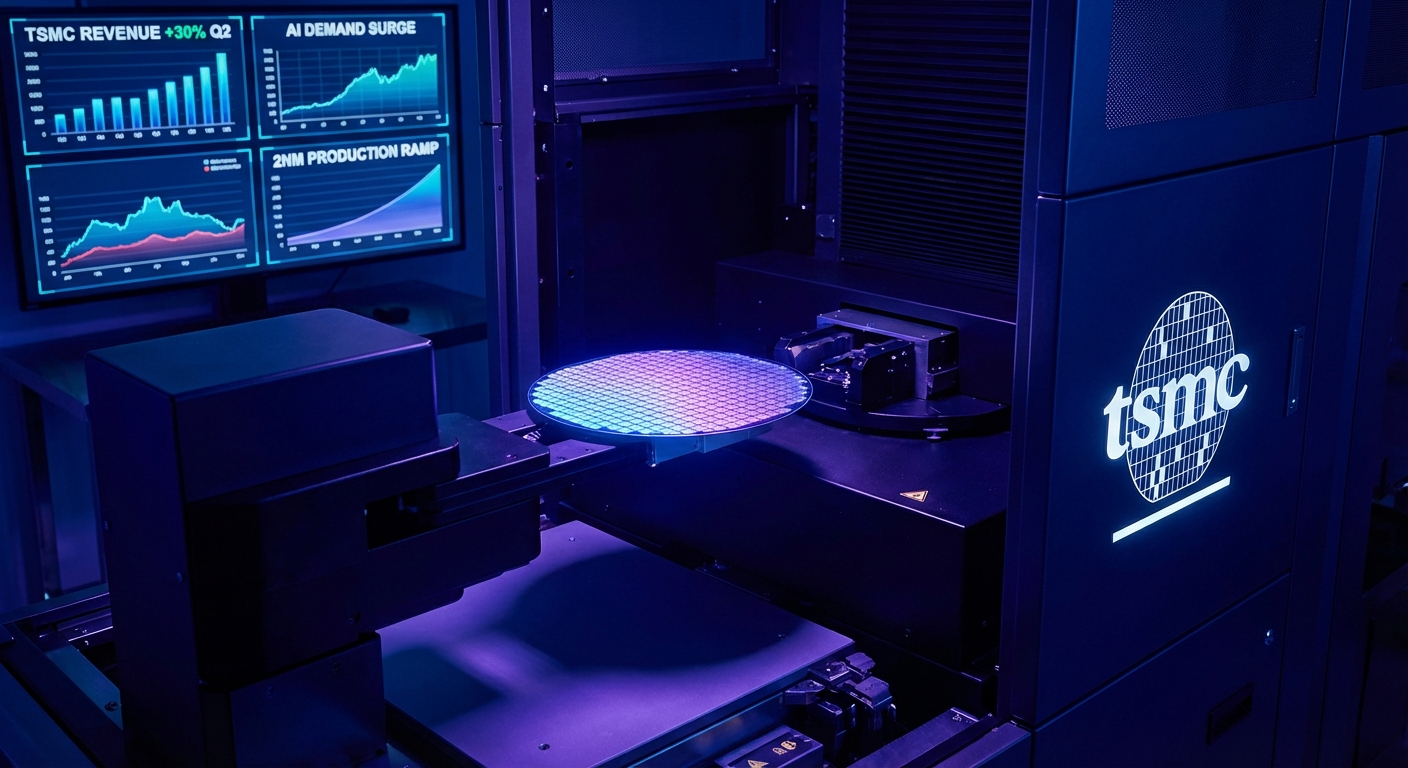
TSMC reported combined January–February 2026 revenue growth of 30% year-over-year, trailing only slightly the 33% increase analysts project for the full quarter, as the world's leading foundry continues to benefit from insatiable AI chip demand. The company's HPC segment — which captures AI data center orders from NVIDIA, AMD, and Broadcom — grew 48% year-over-year and now accounts for 58% of total revenue. In January alone, TSMC delivered net revenue of NT$401.26 billion (approximately $12.7 billion), the highest monthly sales figure in the company's history.
TSMC's capacity is fully allocated, with all leading-edge nodes booked by Apple, NVIDIA, AMD, Qualcomm, and Broadcom. This demand pressure is accelerating the 2nm ramp: TSMC expects the N2 node to be bigger than 3nm adoption from the start, with volume production under way at Fab 22 near Kaohsiung. Wafer starts for 2nm are ramping through the second half of 2026, targeting 100,000–140,000 wafers per month. TrendForce reports that N2 is already recording 1.5× more tape-outs than 3nm at the same stage of production.
Advanced packaging capacity is another key growth driver. TSMC is expanding SoIC (System on Integrated Chips) capacity to 10,000–15,000 wafers per month by 2026, with further expansion planned from 2027 onward to meet demand from NVIDIA's Rubin Ultra and AMD's next-generation accelerators. SoIC requires significantly higher capital expenditure per unit than CoWoS — approximately $6.8–7.0 billion per 10,000 wafers. Meanwhile, TSMC is accelerating its Fab 21 expansion in Arizona, with the site targeting 2nm production by 2028 in support of the U.S. CHIPS Act reshoring agenda. Bloomberg noted that revenue growth is trailing the full-quarter estimate solely due to a memory chip demand softness on the mobile side, not any weakness in AI-related orders.
Sources
Bloomberg, TrendForce